
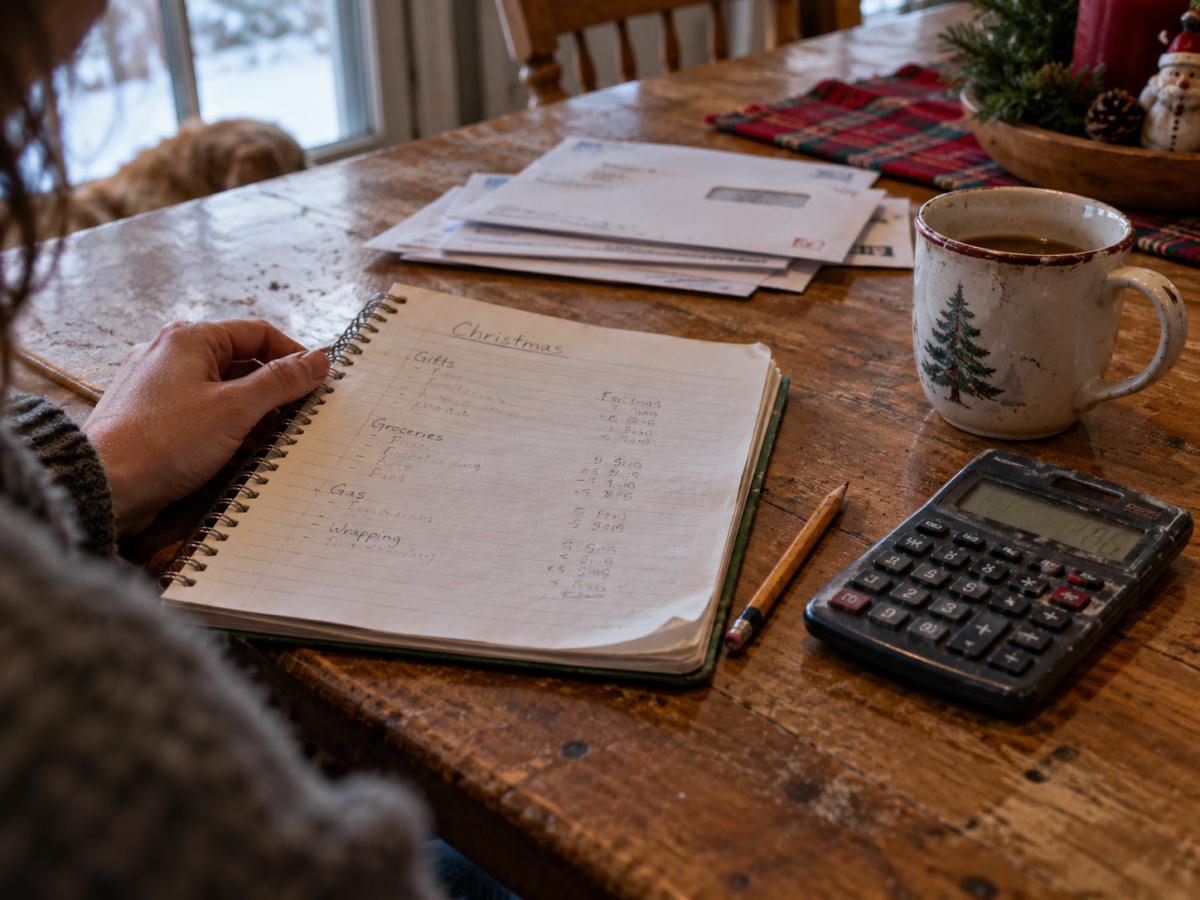
A $40 toy, a $25 classroom gift exchange, and an extra grocery trip can eat through your Christmas money before you’ve even thought about dinner. The way to do Christmas on a budget is to decide what you can spend in total, split it between the things your family cares about, and say no to the rest early.
Table of contents
- Start with the money you’ve actually got
- Make fewer gifts count for more
- Keep Christmas dinner affordable without making it tiny
- Keep the fun parts and lose the expensive habits
- Stop the small purchases from sneaking in
- Give January a little breathing room
- Common questions from families cutting holiday costs
- Make tonight’s first list short
I’d protect the regular bills first. Then I’d keep the gift list short, plan one good meal, and choose free traditions over expensive holiday outings. You can make Christmas feel like Christmas without paying for every invitation, sale, and matching pajama set that comes your way.
Start with the money you’ve actually got
A holiday budget only works when the numbers come from your bank account rather than an optimistic guess about December.
For example, a family might have $300 available after rent, groceries, utilities, debt payments, and other essentials. This is one way to divide it. It’s a sample plan, not a recommended amount for every family.
| Christmas expense | Amount |
|---|---|
| Gifts for children and family | $150 |
| Christmas dinner and baking | $65 |
| Travel or gas | $30 |
| Decorations | $10 |
| Wrapping and cards | $10 |
| One small outing | $10 |
| Extra costs | $25 |
| Total | $300 |
If your number is $100, start there. A smaller Christmas that is paid for beats a larger one followed by weeks of juggling bills.
1. Find your safe Christmas number before buying anything
Open your banking app and look at what’s left after the bills due before your next paycheck. Include gas, regular groceries, childcare, and any minimum debt payments. Money you need for those belongs to those expenses, even when a holiday sale looks tempting.
If only $80 is available for Christmas, make the plan fit $80. The Consumer Financial Protection Bureau recommends accounting for seasonal costs alongside normal spending, instead of leaving them out of your household budget.
2. Give every holiday cost a place
The usual mistake is counting presents but forgetting holiday baking supplies, school events, postage, parking, and the gift for the person who hosts dinner.
Write your spending categories on a sheet of paper or in the Notes app on your phone. Add a dollar ceiling beside each one. You can skip categories that don’t apply to your family. Keep the total equal to or lower than your safe Christmas number.
3. Set a per-person gift limit
Suppose you have $150 for gifts and want to buy for two children, three relatives, and one teacher. Decide the amounts before opening a shopping app. One possible split is $50 for each child, $10 for each relative, and $20 for the teacher, although that uses the full $150 with nothing for cards or tax.
You may choose different people or amounts. That’s the point. A $7 stocking filler should come out of someone’s gift limit, rather than becoming a little purchase that somehow doesn’t count.
4. Protect the food money from gift shopping
Move the amount set aside for Christmas dinner into a separate savings pocket, envelope, or clearly labeled line in your budget. Do it before the big holiday promotions start.
If you’ve set aside $65 for dinner, buying a discounted video game doesn’t make that grocery money available. The roast, potatoes, and vegetables still need to be bought. This matters especially when Christmas food is part of the regular household grocery budget rather than extra money.
5. Leave room for the annoying extras
The batteries cost extra. The shipping charge appears on the last checkout screen. Somebody needs a new pair of tights for the school concert. These small costs are easy to miss.
In the $300 example, $25 stays unassigned. Use it only when a genuine holiday expense turns up. If nothing happens, keep the money. Don’t turn unused cushion money into another shopping trip on Christmas Eve.
6. Tell the adults that you’re spending less this year
A quick conversation in November can prevent a painful gift exchange in December. Say something like, “We’re keeping Christmas small this year. Could we skip adult gifts or do a name draw with a $15 limit?”
Be specific. “Let’s keep it simple” means different things to different people, while a clear limit gives everyone the same expectation. You don’t owe anyone details of your finances to ask for a cheaper tradition.

Make fewer gifts count for more
Children often notice the excitement around opening presents, but adults are usually the ones buying the filler that ends up under a bed in February. I’d buy fewer things with a clear purpose.
7. Make one gift list and keep it closed
Write the name of each person who’ll receive a gift, the amount you can spend, and one actual idea. Then keep that list on your phone during errands.
A $12 mug you see while buying shampoo can seem harmless. So can another $9 pair of holiday socks. Together they eat the money set aside for someone else’s gift. If an item isn’t on the list, take a picture and leave it for now.
8. Give children one main present before adding little ones
If a child has asked for a particular board game or art set that fits their limit, I’d buy that first. Let stockings be mostly small practical things, such as a favorite snack or a pack of colored pencils you needed anyway.
Don’t fill an oversized stocking because it looks empty. The last-minute dollar-aisle pieces often cost more together than the gift you spent time choosing.
9. Try the four-gift idea only if it fits your family
Some families use “something they want, something they need, something to wear, something to read.” It’s a useful way to avoid duplicate toys, but four gifts per child can still be too much when money is tight.
Choose two categories if that works better. For a child who needs winter boots, the boots may already use most of the budget. There’s no reason to add three purchases just to finish a checklist.
10. Ask relatives for an exact wish list
“Anything is fine” often leads to duplicate toys and clothes in the wrong size. Ask for two or three ideas under a specific price, along with sizes and favorite colors where useful.
A parent might say that the child needs a new backpack and loves dinosaur books. That’s enough information to buy something useful. Keep the gift receipt if the store offers one, especially for clothes and shoes.

11. Switch a big family exchange to one-name drawing
When eight adults all buy gifts for one another, that’s a lot of shopping. A name draw gives each person one recipient and a spending limit everyone agrees on.
Write names on slips of paper, use a free random name tool, or draw names at Thanksgiving dinner. Set the rules before anyone shops. If adults opt out completely, don’t pressure them to participate anyway.
12. Buy one shared gift for a household
For grandparents who enjoy family movie nights, a small board game or puzzle might get used more than separate novelty gifts. For a couple, a homemade cookie tin can replace two unrelated presents.
Ask first if they want something for the household. The gift still needs to fit their interests. Giving someone a kitchen gadget they don’t want because it was on clearance doesn’t save money for the recipient.
13. Check secondhand before buying new
Children’s books, puzzles, and some toys can be good used buys. Look at thrift stores, neighborhood resale groups, and local listings. Inspect the condition in person when possible, and make sure every piece of a game or puzzle is there.
For toys, check recalls through the Consumer Product Safety Commission before handing them to a child. I’d avoid used car seats and other safety equipment when the history isn’t known. A low price isn’t worth that risk.
14. Make something people will actually use
A tin of homemade cookies, a loaf of banana bread, or a jar of dry soup ingredients can work for somebody who likes that food. Price the entire grocery basket, including containers and anything you don’t already have.
If a handmade project requires $28 in supplies to make three $5 gifts, the savings disappear. And if your friend can’t eat gluten, a surprise jar of cookie mix isn’t particularly thoughtful. Ask about dietary needs first.

15. Offer a practical favor when money is especially tight
A gift can be a specific favor: watch the kids for two hours on a Saturday, help a relative organize their photos, or make dinner for somebody who has had a difficult month.
Write down what you’re offering and when it can happen. “I’ll help anytime” is vague, and people may hesitate to ask. Give a date or a simple way to arrange one. Only offer the favor if you have the time and ability to follow through.
Keep Christmas dinner affordable without making it tiny
If your family expects a big dinner, plan it around the foods people reliably eat. The expensive part often comes from buying six special dishes and then taking half of them home untouched.
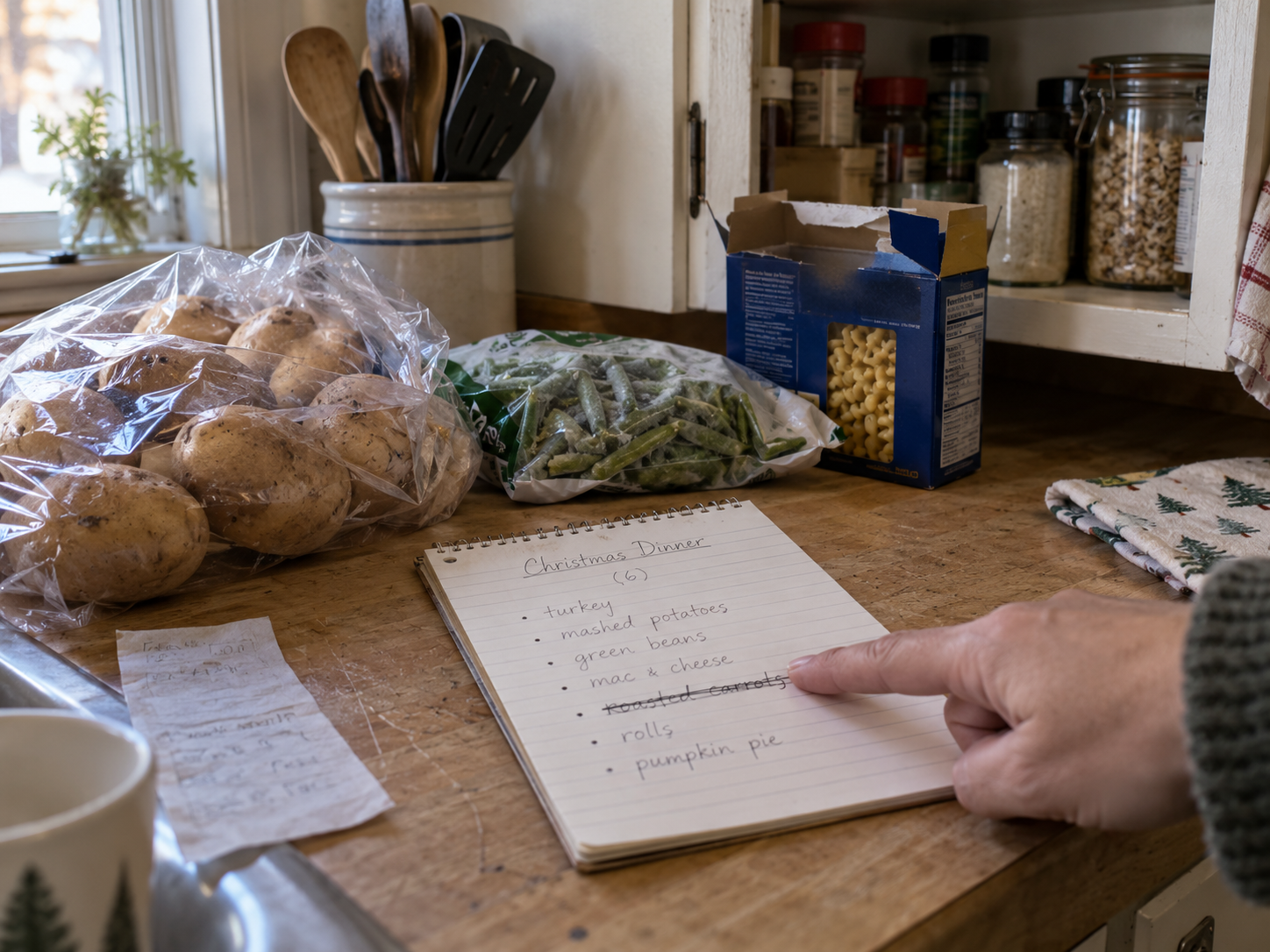
16. Write the dinner menu before making the grocery list
For six people, a roast chicken or an affordable ham portion, mashed potatoes, frozen green beans, rolls, and one dessert can make a satisfying meal. Pick the main dish after looking at your local grocery ad.
Check what the whole package costs. A smaller cut of meat at a higher price per pound may still be cheaper than buying a giant roast you can’t use. Factor leftovers into your plan only if your family will eat them.
17. Cook with pantry ingredients you already own
Open the pantry and freezer before you go shopping. If you have rice, canned corn, pasta, and baking flour, make dishes that use them.
This is the time to choose one family-favorite recipe rather than testing three holiday casseroles with separate specialty ingredients. A dish that calls for two tablespoons of an expensive spice can turn out costly if you need to buy the whole jar.
18. Ask dinner guests to bring one assigned item
If you’re hosting relatives, split up the menu before Thanksgiving weekend or the first week of December. One person brings rolls, another dessert, and another a salad. The host handles the main dish and whatever else fits.
Be clear about the serving amount. “Bring vegetables” can produce a tiny bowl of carrot sticks for twelve adults. Giving someone a job that costs little is fine too. A guest can help with setup or cleanup if buying a dish would be hard.
19. Use store brands for ordinary ingredients
For canned vegetables, dry pasta, flour, and boxed stuffing, compare the store brand with the familiar label. Walmart, ALDI, Kroger and other supermarkets often have comparable basics at different prices.
Look at the package size and total shelf price rather than assuming a large package is the best deal. A two-pound bag of something you need only once may cost more cash today than the smaller package, even if the per-ounce price is lower.
20. Skip the extra appetizers unless dinner is late
If you’re serving at 5 p.m., guests probably don’t need a second meal of cheese, crackers, dips, and individually portioned snacks first. Put out a bowl of popcorn or sliced carrots if children need something to nibble on.
An elaborate charcuterie board might be nice for another occasion. On a tight budget, I’d rather put that money into enough dinner rolls and a dessert everyone likes.
Keep the fun parts and lose the expensive habits
Pick the traditions your children talk about afterward. They might love decorating the tree with old ornaments or driving past neighborhood lights. Those are easy to repeat without shopping for a new theme every year.
21. Open the decoration box before buying more
Unpack your lights, ornaments, stockings, and table decorations early. Check what’s broken and what can be repaired. A string of lights that no longer works shouldn’t automatically send you out to buy an entire matching set.
If you need one replacement item, write that on the shopping list. But don’t redo the entire tree just because the store has a new color scheme on display.

22. Reuse gift bags and wrapping paper
Save clean gift bags, ribbons, and tissue paper from birthdays. Cut plain kraft paper or use a roll of inexpensive wrapping paper for anything that’s too large for a bag.
Don’t buy a fresh gift bag for every present. Ten bags at $2 each would take $20 from a tight gift budget. You can make the table look festive with one roll and a marker for name tags. If paper is torn or dirty, recycle or discard it as appropriate.
23. Make one free Christmas Eve tradition
Try a family read-aloud, holiday music while making dinner, or an evening walk to look at neighborhood lights. Put it on the calendar so it becomes something everyone expects.
A free tradition works best when it’s simple enough to repeat. Buying new Christmas Eve pajamas for four people every year is a pricey way to create a memory that mostly involves wearing clothes at home.
24. Replace a ticketed outing with a neighborhood one
Check local library calendars, free community tree lightings, and public displays. If you plan to drive around looking at lights, keep the trip within your normal gas budget.
A “free” event can still have parking charges, concessions, and a gift-shop exit. Bring water and a snack from home when allowed. Check event schedules before telling the children it’s happening that night.

25. Choose one paid Christmas activity at most
If your family loves seeing a movie together or visiting a holiday market, choose the one experience that matters most. Put it in the budget before the season fills up.
For example, a $10 outing budget could cover a small treat on a free lights walk, but it won’t pay for four theater tickets. Be realistic about the group size and the total. If there’s no room for a paid event this year, keep the free tradition and leave it there.
Stop the small purchases from sneaking in
Most holiday spending doesn’t happen in a single giant shopping trip. It’s the quick online checkout, the extra stocking fillers, and the “might as well” item you carry to the register.
26. Put mailing dates on the calendar now
Shipping late can wipe out the money you saved on a gift. For Christmas 2026, the USPS recommends December 17 for Ground Advantage and First-Class Mail in the contiguous United States if you’re aiming for delivery before December 25. Its suggested Priority Mail date is December 18.
Those are mailing recommendations, not delivery guarantees. Send gifts earlier when you can, especially for addresses outside the lower 48 states. For relatives who live nearby, arranging one family gift exchange can eliminate postage altogether.
27. Keep a list of what you’ve actually bought
Use a note with four columns: person’s name, gift, amount paid, and where you hid it. Put receipts or order confirmation emails in one folder.
If you’ve already bought your nephew a puzzle in October, the list stops you buying another in a December sale. You can see how much remains without trying to remember three weeks of small purchases.

28. Compare the final checkout total, not the sale sticker
A $19 gift with $8 shipping is a $27 gift before tax. Check the full amount and delivery date before placing the order.
The FTC advises shoppers to compare shipping charges and read return policies, including whether returns require postage or restocking fees. Buying from an unfamiliar website to save $4 may be a poor trade if a late delivery or difficult return causes more spending.
29. Avoid payment plans for ordinary Christmas gifts
A pay-in-four button can make a $100 cart look like a $25 purchase. But the other payments still come due when rent, groceries, and January bills do.
Some buy-now-pay-later loans charge late fees, and automatic payments can cause overdraft costs if your account runs short, as the CFPB explains. If a gift won’t fit your budget today, I’d choose a cheaper gift rather than borrowing for it. Anyone struggling with existing debt can ask a qualified nonprofit credit counselor for individualized help.
Give January a little breathing room
Once Christmas has passed, check the receipts before you put the budget away. That information is useful next year, especially when you always seem to forget the same two costs.
30. Return anything you bought out of panic
Look through unopened decorations, duplicate gifts, extra wrapping supplies, and impulse purchases while the stores still accept returns. Read the retailer’s return window and keep the receipt or order email handy.
Don’t return groceries or used items against a store’s rules. But if an unused $18 decoration is still sitting in its bag because the table looked fine without it, getting that $18 back is worth the errand.
31. Start next Christmas with a tiny weekly transfer
Look at what you actually spent this year and choose a savings amount that fits your regular budget. If you can set aside $5 every week for 52 weeks, that’s $260 before interest. A $2 weekly transfer adds up to $104.
Keep it in a separate savings account or clearly marked savings pocket and don’t pull from money needed for bills. If you miss a week, resume when you can. There’s no penalty for building a Christmas fund more slowly.

Common questions from families cutting holiday costs
How much should a family spend on Christmas?
There’s no useful national number for your household. Start with the money left after essential expenses and existing obligations, then decide which parts of Christmas matter to your family. Someone with $120 available shouldn’t take on debt because a survey says other families spend more.
Can Christmas still feel special with no money for gifts?
Yes. Use things you already own for decorations, make a favorite meal with ordinary groceries, and choose traditions such as music, storytelling, or a library event. For children, tell them ahead of time that gifts will be small or different this year. The surprise of an empty shopping budget is harder to handle than a calm conversation.
How do I keep grandparents from buying too much?
Give them a short wish list with practical choices, and politely ask for one gift per child if that’s what works for your home. You can’t control what relatives spend, but you can explain that storage space is limited and that shared experiences are welcome.
What should I cut first if I’m already over budget?
Start with extra adult gifts, decorative purchases, and paid outings that haven’t been booked. Keep essentials and existing bill money protected. If something has already been purchased, check the return rules before assuming the money is gone.
Make tonight’s first list short
Write down the amount you can safely spend, then list everyone you plan to buy for. Give each person a limit and subtract that total before shopping. If it already exceeds your Christmas money, shorten the list or lower the amounts while there’s still time to talk with family.