

You’ve got $200 saved for Christmas, two kids to buy for, and a grocery bill that won’t get any smaller just because it’s December. Start with the $200. Add only what you can safely set aside before the holiday, then decide how much each part of Christmas gets.
Table of contents
- Find the Christmas money before making the wish list
- A Christmas budget that covers the boring stuff
- Decide how much to spend on each person
- Use the free Christmas budget planner
- Keep a running total as gifts arrive
- Give food and travel their own pages
- Put dates beside anything that could cost extra later
- When the budget is smaller than the Christmas you pictured
- Keep next Christmas in mind without rushing this one
- Christmas budget questions worth answering
- Fill in the first page tonight
That’s the whole idea behind a Christmas budget. The harder part is remembering the teacher gift, the extra ingredients for dinner, and the shipping charge that shows up after you’ve found the perfect present.
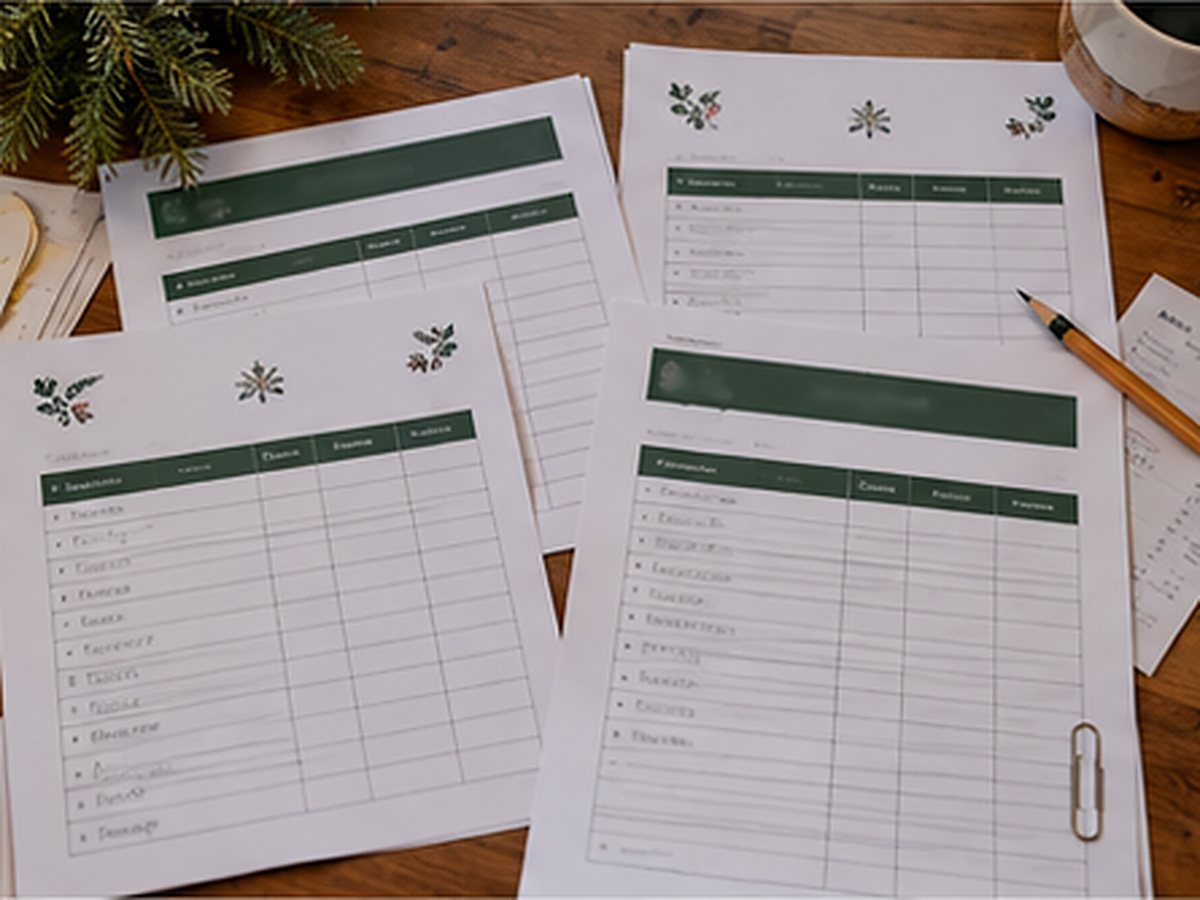
I made a free four-page Christmas budget planner for those details. It has room for gift names, purchase amounts, food costs and the money you still have left. Use the printable with the steps below, or write everything in a notebook if that’s easier.
Find the Christmas money before making the wish list
Open your bank account and look at the money that’s already set aside. Then check what needs to be paid between now and Christmas: rent or mortgage, electric bill, regular groceries, gas, childcare, and minimum debt payments. Keep those bills covered first.
The Consumer Financial Protection Bureau recommends building a spending plan around your real expenses, including costs that come around only a few times a year. That’s good advice for December, when school events and travel can land in the same week as your regular bills.
Say you’ve already saved $180. You have four paychecks left before Christmas and can comfortably move $55 from each one into holiday savings. That gives you $400 to work with.
If a paycheck is uncertain, leave it out for now. You can add it after the money arrives. Planning to spend income you haven’t received makes the gift list look better on paper than it will at checkout.
There’s no magic Christmas amount for a family of four. Someone who has $75 available should make a $75 plan. A number from a shopping survey doesn’t pay your electricity bill.
A Christmas budget that covers the boring stuff
Gifts get all the attention. Meanwhile, wrapping paper, gas, a holiday meal, and a last-minute classroom contribution can take a decent bite out of the total.
Here’s how I’d split that $400 for a household with two kids.
| Christmas expense | Budget |
|---|---|
| Gifts for children and family | $200 |
| Christmas dinner and baking | $90 |
| Travel or gas | $40 |
| Wrapping, cards and postage | $20 |
| A small family outing | $10 |
| Money for surprises | $40 |
| Total | $400 |
This covers the holiday extras. Your regular household groceries and bills still come from their usual budget.
I’d keep that $40 surprise money untouched until most of the shopping is done. Maybe a relative invites you to a potluck, or one gift costs more to ship than expected. If nothing comes up, the money stays yours.
The category limits matter more than getting the amounts perfectly right on the first try. If you need $20 more for gas, move it out of a category where you haven’t spent anything yet. Keep the overall number where it is.
What belongs in the Christmas budget?
Walk through the month in order, from the first gift purchase to the last holiday visit. Include gifts for kids and adults, stocking stuffers, Secret Santa exchanges, Christmas dinner, baking, school contributions, decorations, wrapping supplies, cards, postage, travel, parking, and any outing with a ticket price.
A few of those costs might be zero for your household. Leave them off. But if you travel to see family every December, put gas or train tickets on the page before deciding what to spend on presents.
Decide how much to spend on each person
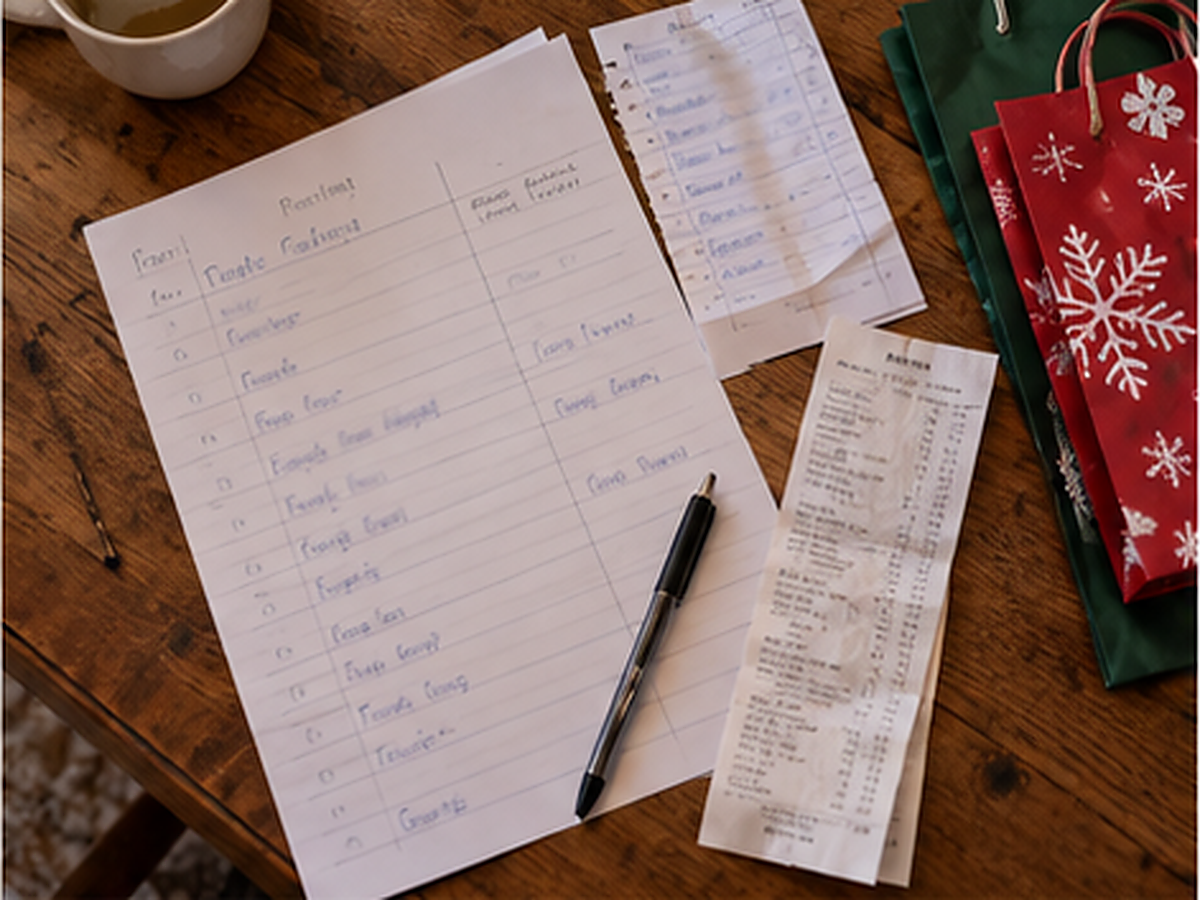
Once your gift category has a number, list every recipient. Include the small gifts. They’re usually the ones that slip past the budget because each one seems cheap on its own.
For the $200 gift category above, a list might look like this:
- Child 1: $55
- Child 2: $55
- Partner: $35
- A parent or grandparent: $20
- Two teachers: $10 each
- A friend: $15
That uses the $200 gift budget. If your family draws names for adult gifts, you may be able to shorten the list even further.
Think about actual gift ideas while you’re setting the limits. A paperback book and an art set might fit one child’s amount. For another, a single game could take most of it. I’d rather buy one thing they’ll use than four small toys chosen because the stocking needs filling.
And have the awkward conversation with the adults early. You can say, "We’re keeping gifts small this year. Would everyone be okay with a name exchange and a $20 limit?" It gives people a chance to agree before they’ve bought anything.
Put the whole price beside the gift
A $24.99 toy can take more than $25 from your budget once tax and shipping are added. Use the total you actually pay. If you order several gifts in one shipment, record the amount against the relevant names or put delivery costs in the postage category.
Check what’s already in the closet, too. It’s easy to buy a backup present and forget you picked up the original back in October.
Use the free Christmas budget planner
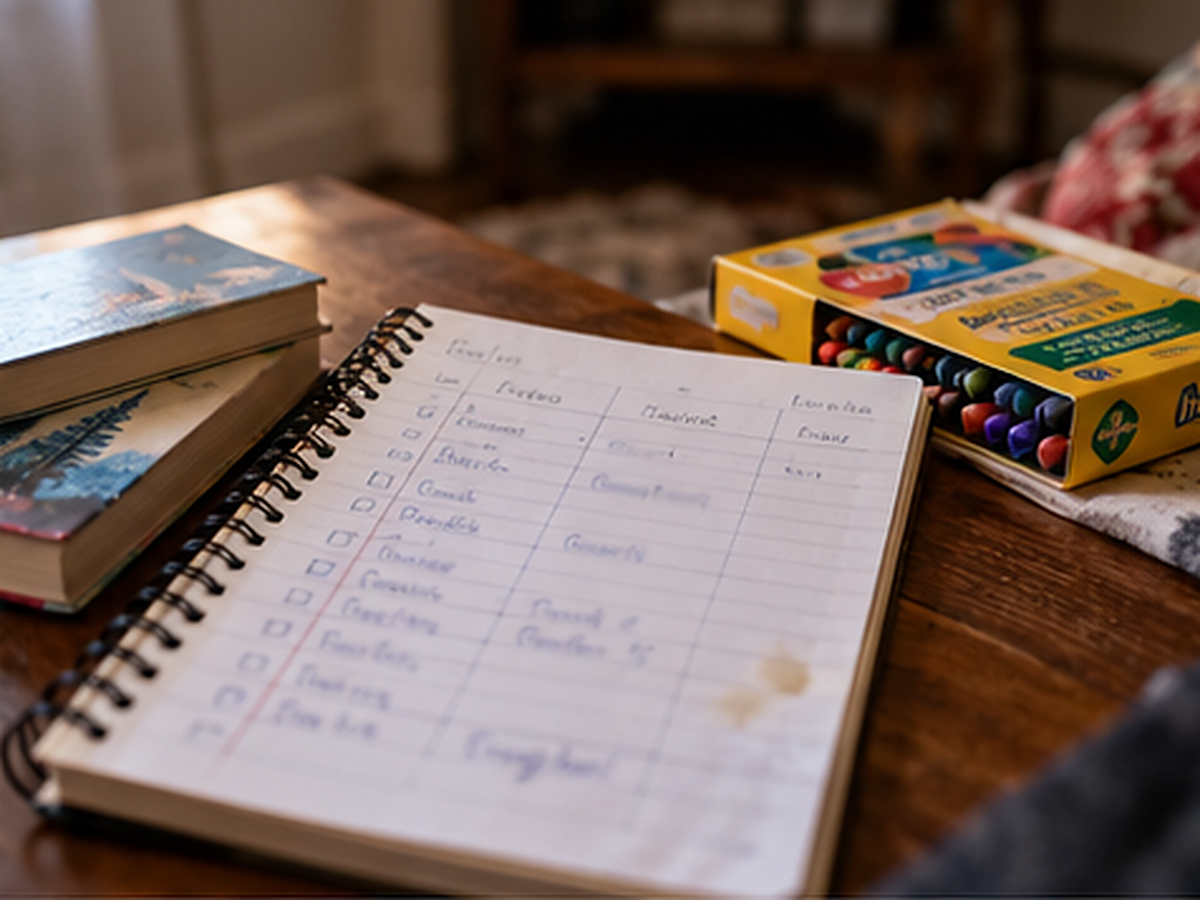
The four-page printable gives you one place to keep the whole plan. You can print all four pages on US Letter paper, or print only the page you need.
Download the free four-page Christmas budget planner (PDF)
The planner includes:
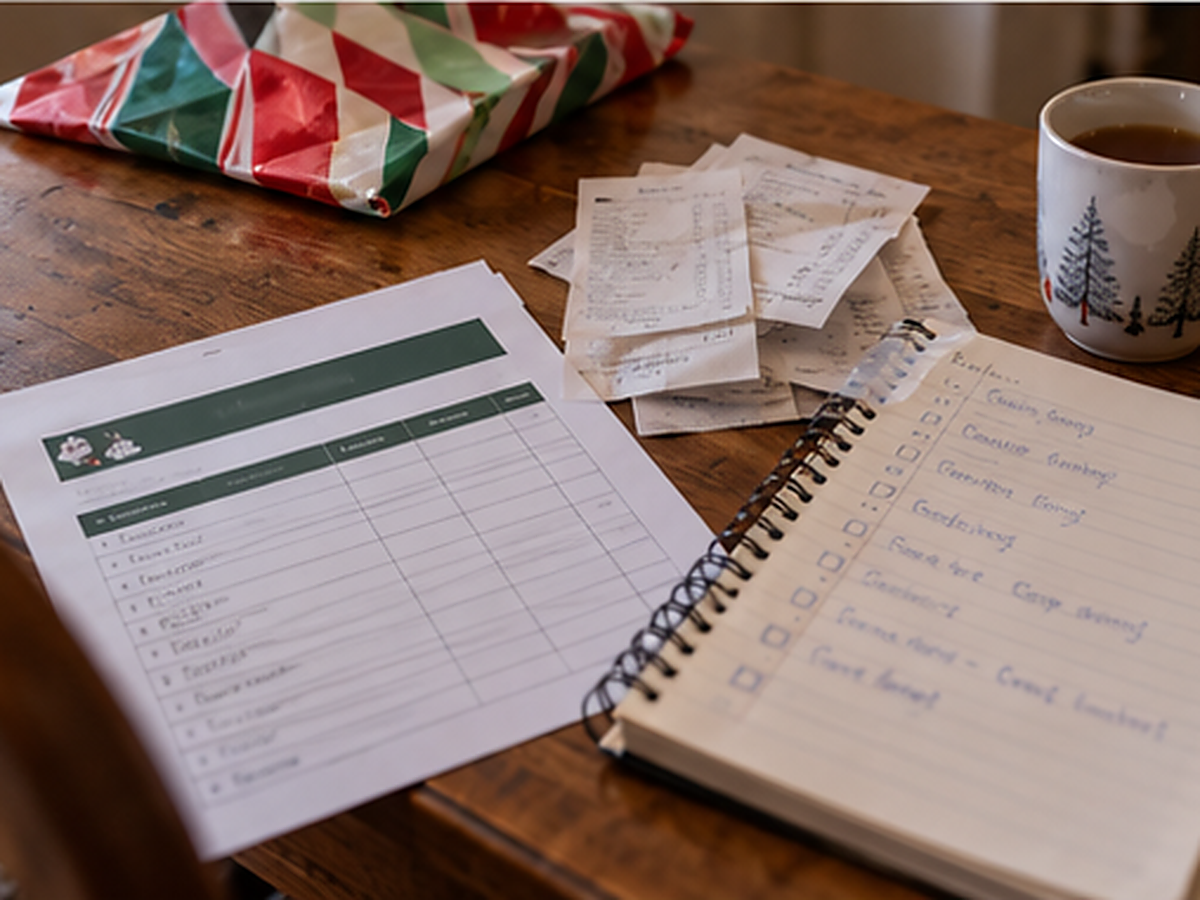
- Christmas Budget at a Glance. Write the money already saved, what you can still add, and the amounts set aside for gifts, food, travel, decorations and extras. It has space for planned spending, money spent and what’s left.
- Christmas Gift List. Keep the recipient, gift idea, spending limit, amount paid, purchase status and store together. There are extra lines for sizes and notes.
- Holiday Spending Tracker. Record each purchase, including the small extras. There’s also a simple checklist to use before your next shopping trip.
- Food, Travel and To-Do List. List dinner ingredients, travel costs, deadlines and final tasks in one place.
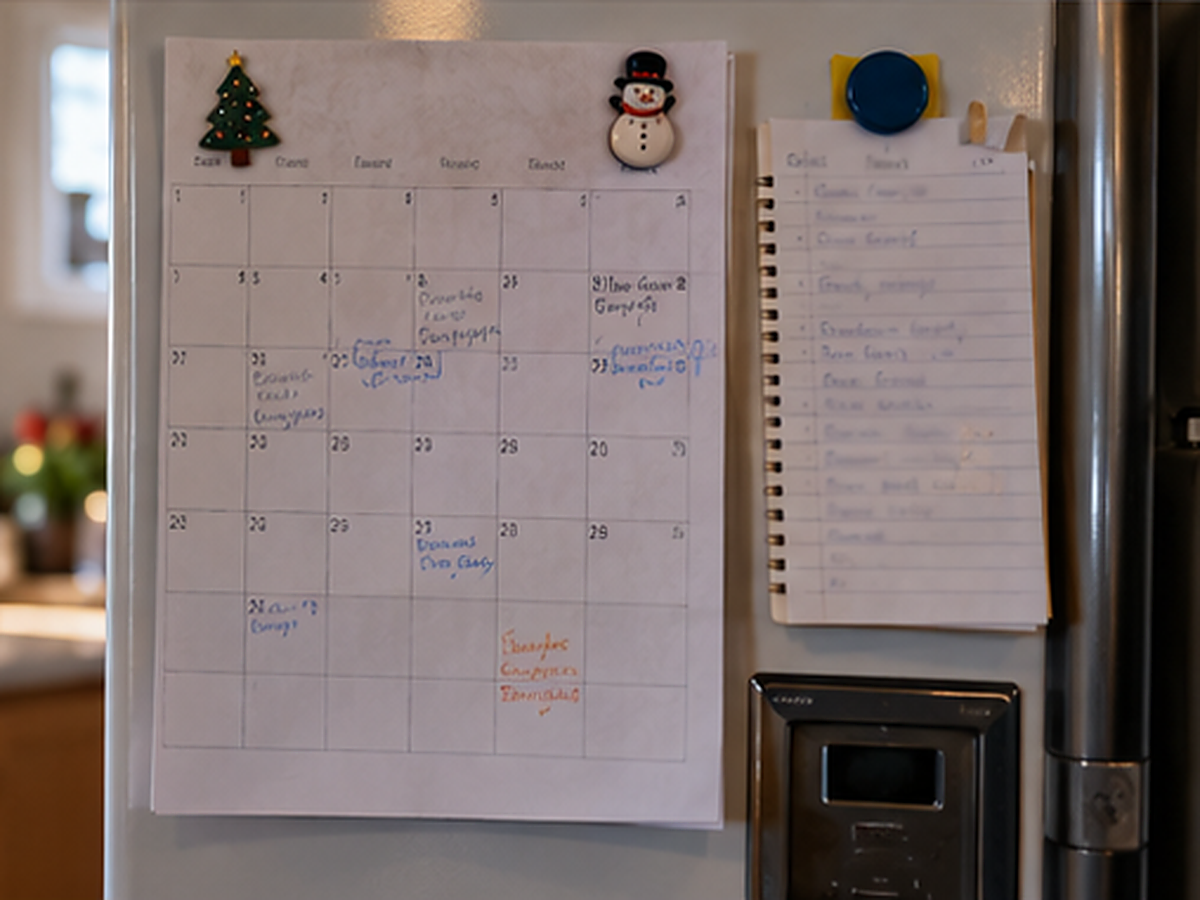
Start with page one. Fill the total spending limit, then the category amounts. Pages two and three come next, once you’ve made the gift list and begun shopping. Page four can stay on the fridge so whoever buys groceries can see what’s still needed.
The PDF is designed for printing and writing by hand. If you prefer doing everything on your phone, you can copy the same columns into a note or spreadsheet.
Keep a running total as gifts arrive
The first time you update the tracker, it will feel a little fussy. Give it a week. Once deliveries start arriving and stores send separate confirmation emails, having everything written down gets useful fast.
Suppose you’ve assigned $55 to one child. You order a book for $14, an art set for $26 and pay $5 for delivery. Write $45 in the amount-paid column and leave $10 beside their name. If you find a $12 stocking gift afterward, you can see immediately that it would take the total over the amount you chose.
For online orders, save the order emails in a folder called Christmas. Put the delivery status in the same place as the gift list. Mark gifts as purchased when you’ve paid for them, and mark them received when they’re in your hands. Those are two different jobs.
The FTC recommends keeping order details and return policies, plus checking the full price including delivery charges when comparing sellers. That helps when a package doesn’t arrive or you need to return something.
Give yourself ten minutes once a week
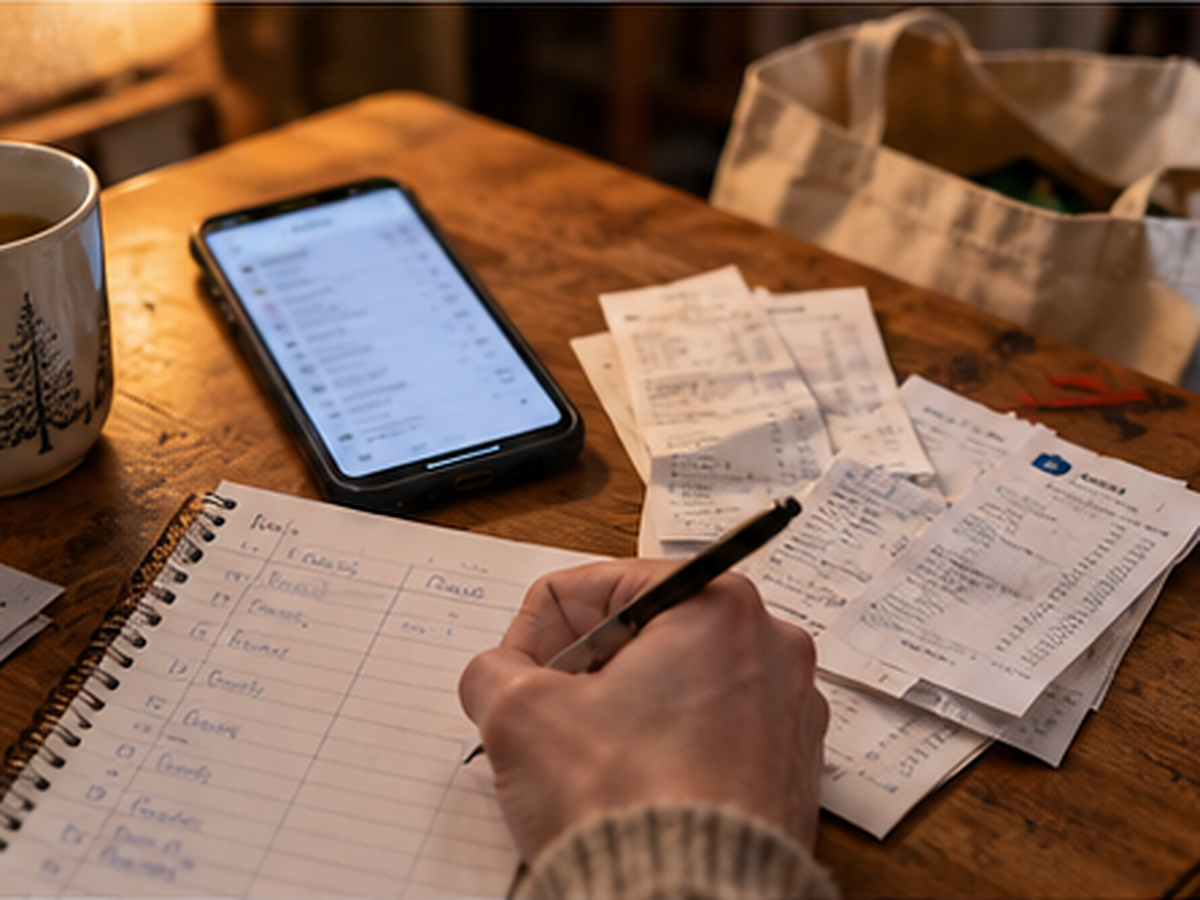
Pick Sunday evening or another quiet time. Open the planner and enter purchases from your receipts and emails. Then look at what remains for each category.
If you’re halfway through the gift money and have bought for only two people out of ten, change the remaining gifts before more orders go through. Buying on sale doesn’t solve a list that’s too expensive overall.
Give food and travel their own pages
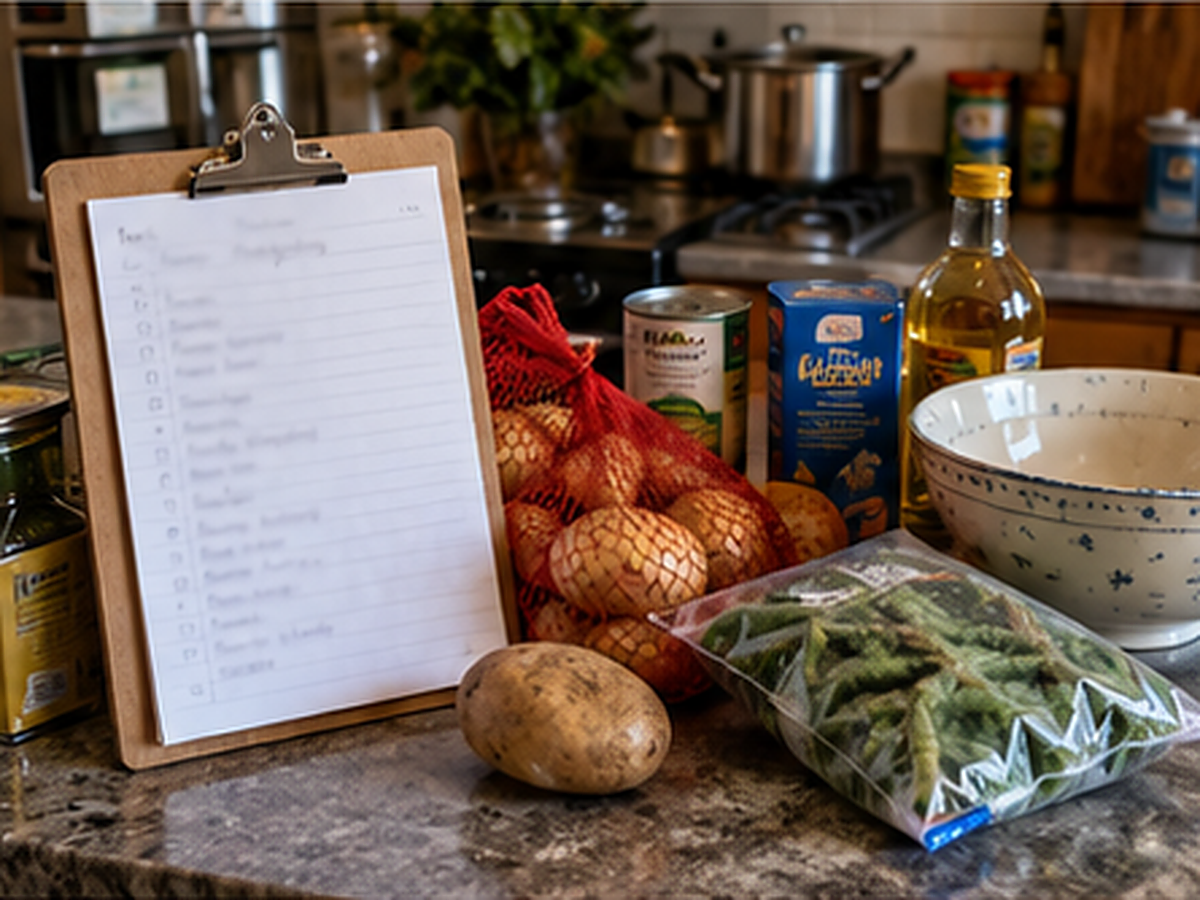
A Christmas grocery run can easily feel like ordinary food shopping, especially when you’re picking up ingredients over two or three trips. Write down what you’re buying for the holiday meal separately.
For a six-person Christmas dinner, you might need a main dish, potatoes, one vegetable, rolls and dessert. Check the pantry before making the grocery list. If you already have flour, canned corn and frozen vegetables, use them instead of buying new ingredients for an elaborate recipe.
On the food page of the planner, write the dish, amount needed, rough cost and amount actually paid. Keep baking ingredients there too, including the butter and eggs. A recipe that uses one teaspoon of a spice can still require buying a whole jar.
Use the lower half of that page for the road trip to your parents’ house, school concert tickets, parking, or any other holiday cost. When you’ve bought a ticket or paid for gas, write it down.
If you share holiday food with relatives, assign specific dishes. A sibling bringing mashed potatoes can take that entire item off your shopping list. I’d confirm who’s bringing what before buying the ingredients, rather than hope somebody shows up with rolls.
Put dates beside anything that could cost extra later
You might have enough money for a gift at the regular price but run out of time for affordable shipping. Add a "buy by" date to anything you’re ordering. Leave some room for a return or replacement if the size is wrong.
I wouldn’t build the plan around one particular Black Friday deal. If the exact gift you want is already affordable and the delivery date works, buying it early can be sensible. If the cart total is too high, a sale banner doesn’t make it cheaper than your limit.
The FDIC’s holiday shopping guidance recommends making gift lists and comparing prices, while watching for extra purchases triggered by sales. It’s easy to end up with a second toy just because the first one qualified for free shipping.
For an unfamiliar online shop, check the seller and return policy before paying. The FTC warns about fake shopping sites using unusually low prices. If a deal requires payment through a gift card or wire transfer, leave it alone.
Make a pause rule before December gets busy
Keep a short note on your phone called "Maybe Later." Put unplanned purchases there and wait a day before buying. If you still want the item, check which part of the budget would pay for it.
The pause won’t fix every impulse purchase, but it stops you from ordering a second set of decorations just because an app sent a notification while you were making dinner.
When the budget is smaller than the Christmas you pictured
Maybe you have only $100 to spend, or your work hours have been cut. Start with the holiday expenses you truly can’t avoid, such as gas to visit family. Then decide who gets a gift and what kind.
With $100, you could put $40 toward gifts, $35 toward a simple family meal, $15 toward travel and keep $10 aside for anything you forgot. Skip new decorations and paid outings. Use the dishes and ornaments you already own. Tell relatives you’re reducing gifts before they shop for you.
If there’s no spare money after bills, don’t create a Christmas budget by putting gifts on a payment plan. A pay-later checkout can turn one December purchase into several bills due in January. If you’re already dealing with debt payments, a qualified nonprofit credit counselor can help you look at your options.
Some households qualify for local holiday toy programs or community food support. Look at school notices, local charities and community centers in your area rather than assuming any particular program has space left. Apply early when there is a deadline.
A smaller gift list is allowed
If the total is too high, remove some purchases rather than shaving a dollar from every gift. I would start with adult exchanges that nobody is excited about, extra stocking fillers and themed decor.
For a child, one wanted gift plus a cozy family evening can be enough.
Keep next Christmas in mind without rushing this one
After the holiday, take five minutes to write the total you spent. Note any categories that surprised you, whether that was extra food, more gas or gifts you forgot to count. Keep the planner in your budget folder.
If you want to save $300 for the following Christmas, setting aside $6 each week for 50 weeks would get you there. A smaller transfer works, too. Use an amount that won’t take money from your regular bills, and change it when circumstances change.
Christmas budget questions worth answering
How much should a family of four budget for Christmas?
Start with the money available after rent, utilities, groceries and other normal bills. A $400 Christmas plan is workable only if that money is genuinely available. Some families will need a much smaller number, while others have saved for months and can spend more without borrowing.
Should I count gifts I’ve already bought?
Yes. Put their purchase amounts in your tracker and mark them paid. If the gifts were bought with savings specifically set aside for Christmas, include them in your overall spending total so you know what the season really cost.
Do I need a separate savings account?
No. An envelope, a clearly labeled savings pocket or a simple note showing what you’ve set aside can work. Separate accounts can make the money easier to see, but there’s no reason to open a new account solely for this printable.
Can I use the planner without a printer?
Yes. Copy the same four page headings into a notebook, Google Sheet or Notes app. The printable is for people who prefer to write on paper; the spending plan works either way.
Fill in the first page tonight
Write down what’s saved, what can safely be added before Christmas, and your total spending limit. Then put a number next to gifts, dinner and travel. Once those amounts are on the page, the wish list has to fit inside them.
For more ways to reduce holiday costs, read How to Do Christmas on a Budget: 31 Tips for Tight-Budget Families.