

The 100 envelope challenge adds up to $5,050, but it only works if you can afford all 100 deposits. A smaller set or a longer timeline can make the idea useful without putting bills at risk.
Table of contents
- Number envelopes from one through one hundred
- Why the total is 5,050 dollars
- Choose a pace based on paydays
- Pick amounts in a planned order
- Try a half-size version
- Try the one-through-fifty version
- Use a bank account instead of cash
- Mark difficult weeks without doubling
- Free printable 100 envelope tracker
- Questions people ask
- Fill your first envelope this payday
These amounts are examples. If you are behind on rent, utilities or other essential bills, catch those up before you start filling envelopes.
Number envelopes from one through one hundred
Write one number on each envelope. Put the matching dollar amount inside when you choose that envelope. Number 27 gets $27, and number 100 gets $100.
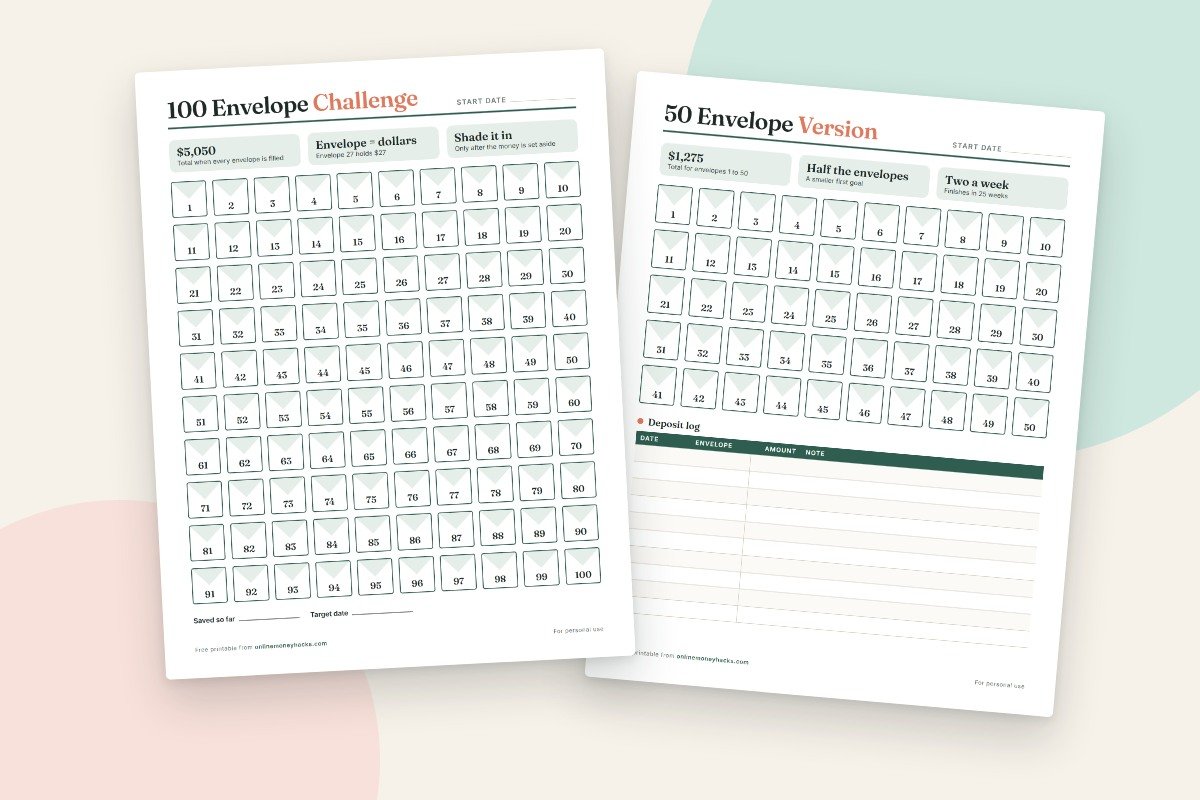
Shade the matching envelope number only when the money has been set aside. If you use a savings account, note the transfer date.
Why the total is 5,050 dollars
The numbers 1 through 100 add up to 100 × 101 ÷ 2 = $5,050. You need to fill every envelope once to reach that figure.
Choose a pace based on paydays
Two envelopes per week take 50 weeks. One envelope per week takes 100 weeks. A 100-day version requires much more available cash and is not realistic for every household.

Pick amounts in a planned order
Random envelopes are fun, but pulling $92 and $98 in the same week may strain your budget. Choose affordable numbers each payday and save the larger ones for higher-income weeks.
Try a half-size version
Save half each envelope number instead of the full amount. The total becomes $2,525, though some deposits will include 50 cents.
Try the one-through-fifty version
Use envelopes numbered 1 to 50. Their sum is 50 × 51 ÷ 2 = $1,275. It is a smaller goal with fewer envelopes.
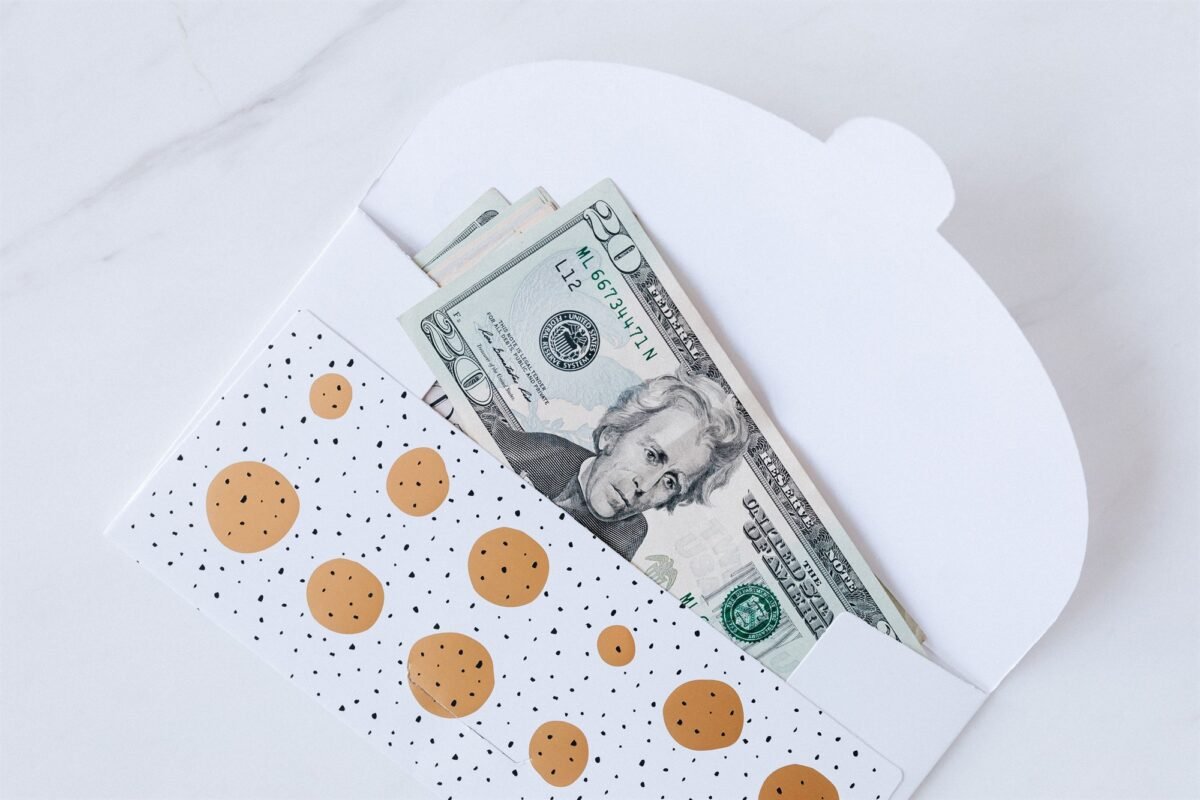
Use a bank account instead of cash
Transfer the selected amount into a dedicated savings account and color in the matching number on the tracker. This avoids keeping thousands of dollars at home.
Mark difficult weeks without doubling
If a week is tight, choose a low number or skip it. Keep the unfilled envelopes visible and extend your deadline rather than borrowing money to meet the challenge.
Free printable 100 envelope tracker
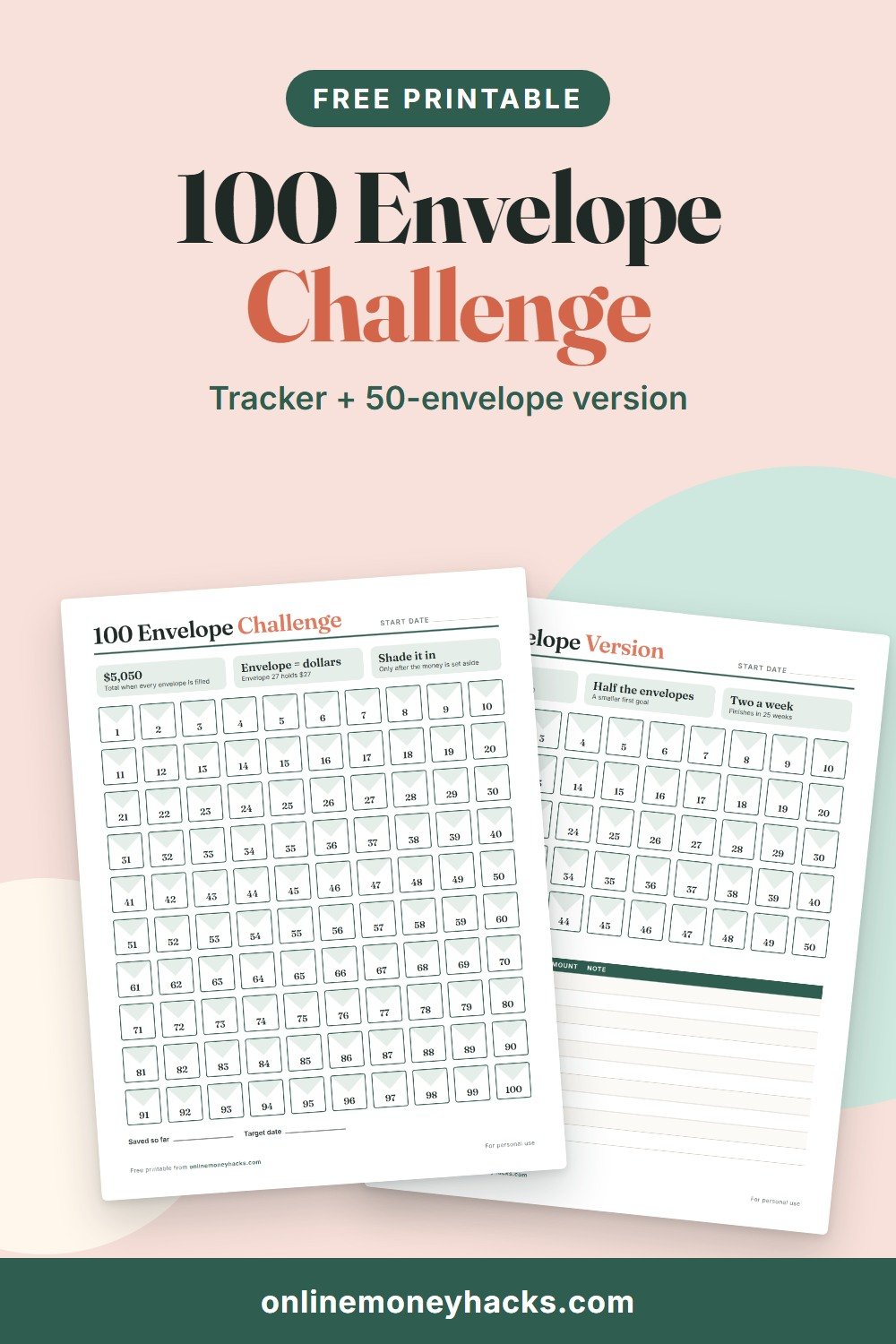
The free two-page PDF has all 100 numbered envelopes to shade in, plus a 50-envelope version with a deposit log. Print it, keep it with your savings record and shade each envelope after the money is set aside.
Questions people ask
How long does the 100 envelope challenge take?
It depends on your pace. Two envelopes a week takes 50 weeks, and one a week takes 100 weeks. Finishing in 100 days means setting aside a little over $50 a day on average.
Is it safe to keep the envelopes at home?
Keeping thousands of dollars in cash at home carries a risk of theft, loss or fire. Many people keep the paper tracker for the fun of shading envelopes and move the money into an insured savings account.
Can I do the challenge with a partner?
Yes. Split the numbers, for example odd numbers for one person and even numbers for the other. The odd envelopes add up to $2,500 and the even ones to $2,550.
Fill your first envelope this payday
Print the tracker, pick one low number you can afford this payday and shade it once the money is set aside.
Prefer a fixed schedule? The 52-week money challenge tells you exactly what to save each week.