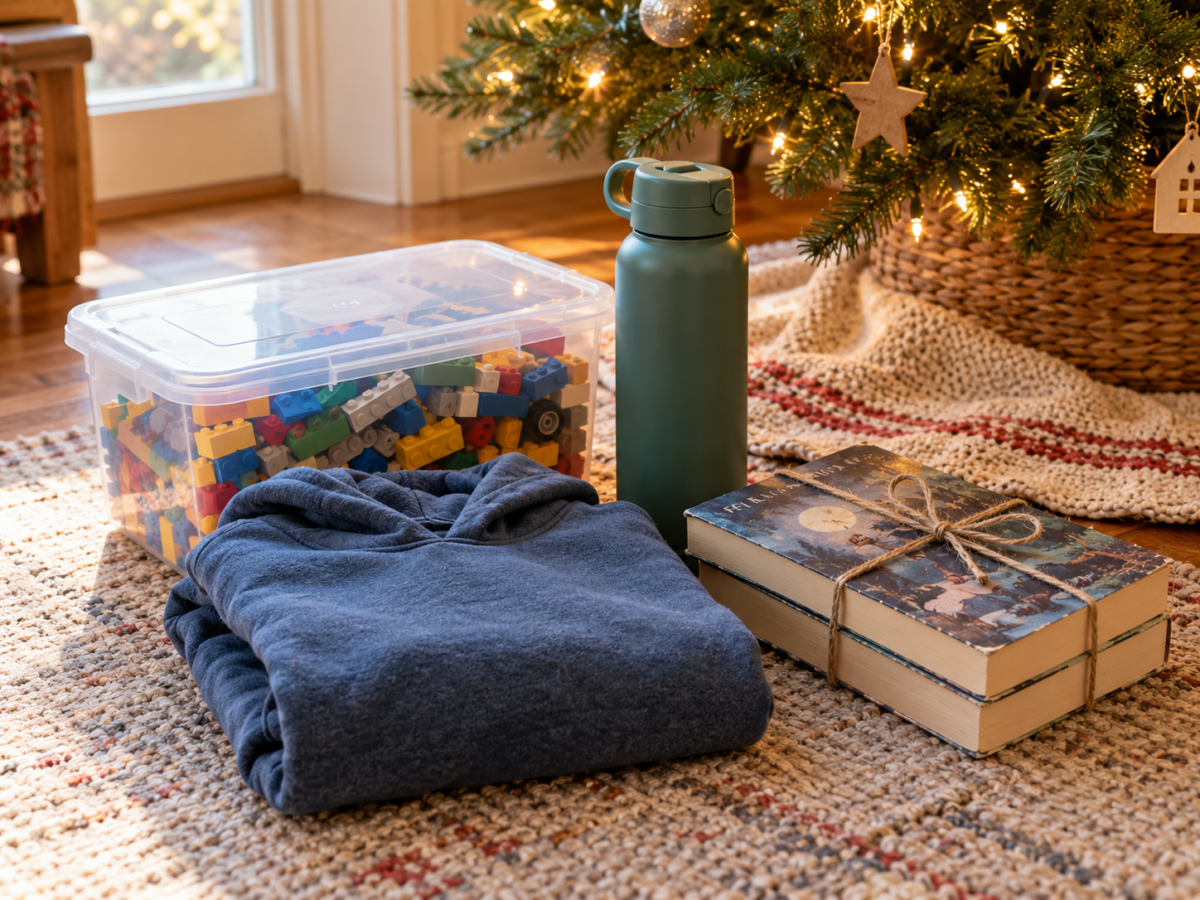
Four Christmas gifts can still add up to $200 if every box gets a $50 item. The want need wear read gift ideas approach helps with clutter only after you set the amount you can spend.
Table of contents
- Want gift ideas that survive the January toy purge
- Need gifts that fix an everyday annoyance
- Wear gifts that fit and get worn
- Read gifts for every kind of reader
- What the four gift rule looks like on a $100 budget
- Want need wear read for toddlers, teens and adults
- Questions parents ask about the four gift rule
- Fill in the four blanks before you shop
- Useful sources
I like choosing one thing a child asked for, one useful item, something they’ll wear and one book they’ll actually read. The four labels give you a plan at the store, without turning Christmas morning into a shopping contest.
Want gift ideas that survive the January toy purge
Ask your child what they keep coming back to. The ‘want’ slot can hold the exciting gift, though it still needs to fit the family budget.
1. A single toy the child has asked about twice
Ask which toy is still on their mind after a few weeks. If it changes every afternoon, wait.
A $20 building set that gets used all winter is a better ‘want’ than four impulse toys from the checkout aisle. Check the age label and avoid tiny pieces around younger siblings.
2. A family card game they can choose
An older child might choose a game that works for two to four players. Look at the recommended ages and how long a round takes. A game that takes 90 minutes to learn can become a shelf decoration when the family has ten spare minutes after dinner.
3. An art kit in the medium they already use
If they draw daily, a fresh sketchbook and good colored pencils may feel like a real treat. Someone who hasn’t touched watercolor paint all year probably won’t suddenly want a big painting kit. Keep one set within your chosen gift allowance.
4. A used bike or scooter that fits
Secondhand can free up room for a bigger ‘want,’ but check the brakes, wheels and frame. Budget for the correct helmet and needed safety equipment. A used bike with unsafe tires is an expensive problem disguised as a bargain.
5. A sports item for a team they’re already on
A new basketball, jump rope or pair of practice cones can count as the ‘want’ gift. Check what the league allows and whether the family has room to use it. A ball that suits their current skill level gets used more than a gadget based on a passing trend.
6. A planned outing instead of another toy
Put tickets to a local museum, swimming pool or family event in a card. Set a date and check the full cost for whoever must go along. A $12 child ticket can turn into a $50 outing if adults need admission and parking.
Need gifts that fix an everyday annoyance
A ‘need’ gift should solve a small problem the child already has. Parents do need to buy school supplies and clothes all year; Christmas is a time to make one of those items a little more personal.
7. A backpack with a working zipper
Ask whether their school bag really needs replacing. A sturdy used or sale-priced backpack can be the ‘need,’ especially if the old zipper fails every morning. Try it with their lunch box inside before gifting it.
8. A leakproof water bottle
Choose a size that fits the school bag and cup holder. The seal and spare parts matter more than the printed character. If the child already has two working bottles, skip this slot and use that part of the budget for something else.
9. A desk lamp for homework
For a student who works at a dim table, a basic lamp with safe, stable wiring is useful. Make sure it fits the available space and the outlet isn’t overloaded. A flimsy clip lamp that falls onto homework will be annoying all year.
10. A lunch container they’ll open on their own
Young children need lids they can manage without a teacher. Practice closing the container before wrapping it. This helps a parent avoid the old cycle of replacing lost disposable bags every week.
11. A cozy blanket for a cold bedroom
If the household is already well stocked with throws, this is an easy skip. But a child who steals the living-room blanket nightly might enjoy their own washable one. Check dimensions so it actually covers the bed.
12. A storage box for an existing hobby
A small parts organizer can hold beads, action-figure accessories or craft scraps. Test the compartments with the items it will store. This is a need that makes a hobby easier, not an excuse to buy a new hobby with another shopping list.
Wear gifts that fit and get worn
For kids, fit matters more than the trend. Choose a size the child can use now and keep the receipt, especially when buying shoes.
13. Pajamas the child helped pick
One soft cotton set can feel special if your child chooses the print. Check the washing instructions and size; sleepwear for children has safety standards, so buy an age-appropriate product from a reputable seller.
14. Everyday sneakers in the next size
Measure the child’s current feet before buying. A pair of shoes that fits today is more useful than a fancy style purchased months in advance. Keep the receipt so they can exchange an uncomfortable pair.
15. A hoodie they will wear to school
Pick the color they reach for already. Teens are more likely to use a plain sweatshirt than one decorated with a slogan picked by an adult. A sale-priced hoodie can cover this category without needing a second outfit.
16. Winter gloves with good grip
For a child who walks to the bus, warm gloves beat a fashion scarf. Choose a pair that fits around the wrist and lets them hold things. Put the pair together inside the wrapping so one glove doesn’t disappear.
17. Slippers with sturdy soles
If your home has cold floors, washable slippers can be practical. Check the sole grip and the fit. Avoid oversized floppy pairs for kids who race down the stairs.
18. A raincoat for a wet-weather school run
This is often the most useful ‘wear’ choice in rainy regions. Try the hood over the child’s usual backpack straps and check whether the sleeves are long enough. A clearance raincoat in a sensible color can be better than a festive outfit worn once.
Read gifts for every kind of reader
Reading is broader than novels. A sports guide, picture book or a useful cookbook all belong here if the recipient will open it.
19. A picture book tied to a current interest
A child fascinated by trains may reread a train book all winter. Choose one whose words and pictures suit their age; buying a famous bestseller is less important than getting the subject right.
20. The next volume of a favorite series
Check the bookshelf so you don’t buy book four when they need book three. Used bookshops can have clean copies for a few dollars, and most children won’t mind an older edition if the pages are sound.
21. A graphic novel for a reluctant reader
A story told in panels can help a child who gets tired of long text pages. Look at the age guidance and skim the content. Don’t assume graphic novels are only for younger readers.
22. A cookbook for an interested teen
A beginner cookbook with common grocery ingredients is a better gift than a beautiful chef book requiring specialty pans. Flip through three recipes and ask whether your kitchen actually has the tools.
23. A library-sale box of three used books
If the household wants to spend less than $5 on reading, a library sale can make a small stack possible. Choose books that are clean and relevant, not whatever happens to be bundled together.
24. A magazine issue or hobby guide
A teen who reads about gardening, skateboarding or drawing might value a focused guide more than a novel. A single current issue can work when you don’t want the ongoing cost of a subscription.
What the four gift rule looks like on a $100 budget
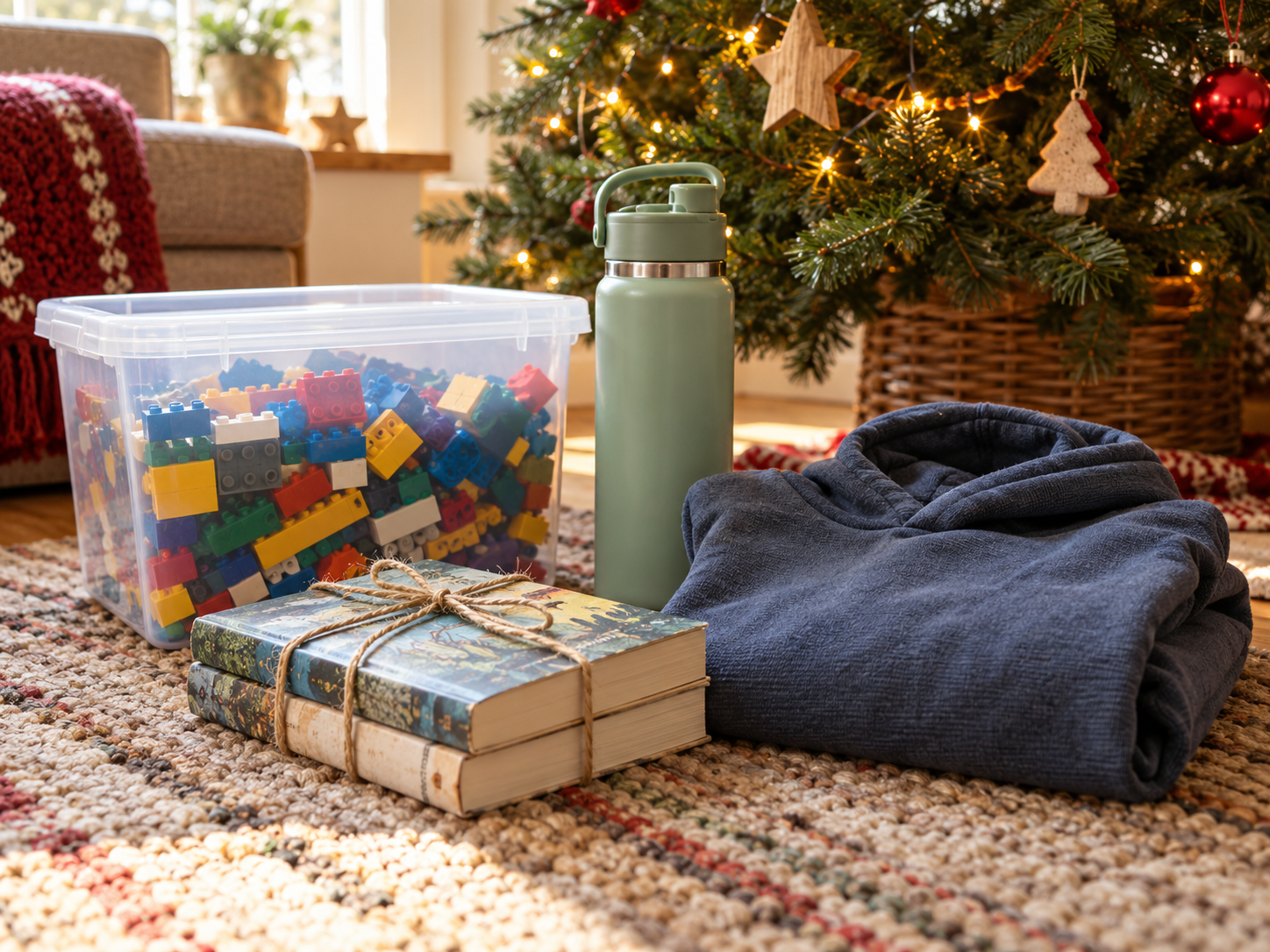
| Gift | Example for an 8-year-old | Amount |
|---|---|---|
| Want | Used building set with all the pieces | $30 |
| Need | Leakproof water bottle | $15 |
| Wear | Hoodie in a favorite color | $30 |
| Read | Two used chapter books | $10 |
| Wrapping and extra room | Paper, tape or an unexpected price change | $15 |
| Total | $100 |
You can use a $60 version by choosing a $20 want, $15 need, $15 wear and a $5 secondhand book, leaving $5 for wrapping. If the need is already covered, don’t go shopping for a problem to solve. Swap that slot for an experience, a contribution to a bigger item, or a joint family gift.
Want need wear read for toddlers, teens and adults
A toddler might get large stacking cups, a washable bib, pajamas and a board book. Check the age and choking warnings: the CPSC advises keeping small parts away from children under three.
For a teen, try an art item they asked for, a replacement backpack, a hoodie they choose and the next book in a series. Ask what they actually want instead of surprising them with clothes in a style they’ll never wear.
Adults can use the same framework: a desired hobby supply, a worn-out kitchen tool replaced, comfortable socks and a book. The four categories also work for Secret Santa shopping lists, but you wouldn’t buy four presents for one coworker in a $20 gift exchange.
Talk about fewer presents before Christmas morning
I’d explain the four categories before the gift list is written: ‘We’re choosing four presents that fit what you want and need.’ Older kids may be willing to help choose. Keep stockings and gifts from relatives separate in the conversation, so no one is surprised by a rule you never discussed.
You could move to this slowly. For a family used to six gifts, start by choosing two sensible things and one bigger want rather than making a show of a sudden cutback.
Questions parents ask about the four gift rule
Does each gift need to cost the same?
No. The ‘want’ may be your largest purchase, while a library-sale book costs $3. The total family spending matters more than making every box equally expensive.
Can a child get more than one book?
A small stack of secondhand books can fill the read slot. Count it as one wrapped gift if that’s how your family wants to use the system.
What if my child doesn’t need anything?
Skip that purchase and use the money elsewhere. The four words are a planning tool, and a made-up need adds clutter.
Is the want need wear read approach good for large families?
Yes, if you set a total before shopping. Multiply each child’s planned amount by the number of children, then include stockings and any family gift. A list of four presents per child can still get expensive without that number.
Fill in the four blanks before you shop
Write each child’s name and four headings on a sheet of paper. Ask for one idea under each, then put a dollar limit beside it. Cross off anything you already own or that your child has stopped asking for.
Useful sources
- CPSC toy safety: https://www.cpsc.gov/Safety-Education/Safety-Education-Centers/Toys
For more ideas, see our Christmas gift ideas under $25 and DIY Christmas gifts.