You can invite ten friends over for Thanksgiving dinner without paying for ten people’s groceries. But you have to tell everyone what to bring before they start shopping.
Table of contents
- Set the budget before you send invitations
- Make the menu a potluck, with actual assignments
- Your invitation text can be plain and useful
- Keep the food familiar and the grocery list short
- Decorate with what you already own
- Make the seating comfortable before making it pretty
- Free Friendsgiving games people will actually play
- A cooking schedule that won’t ruin the afternoon
- Split cleanup before the last guest leaves
- What Friendsgiving really costs
- A few things to settle before your friends arrive
- Send the group message tonight
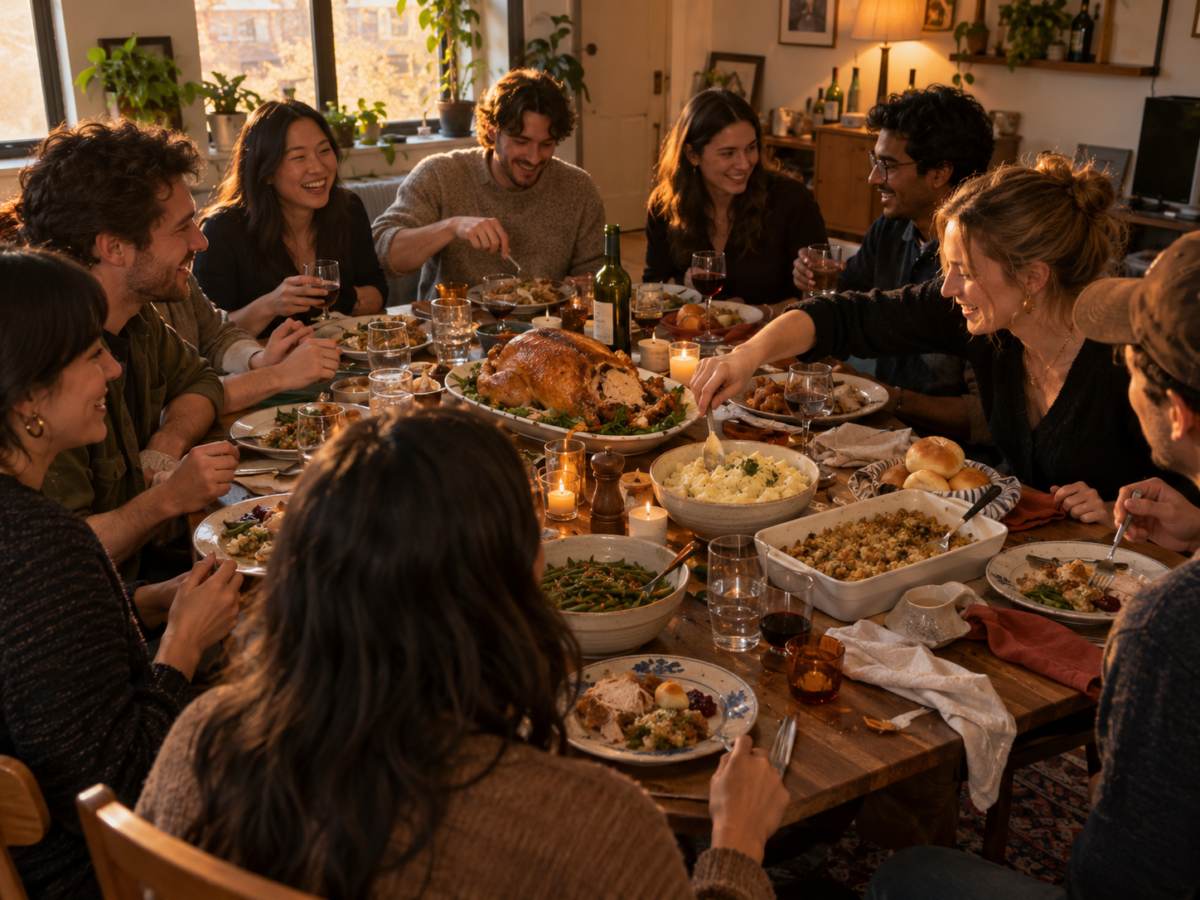
For a Friendsgiving on a budget, I’d have the host handle the turkey, gravy, water, and a place to eat. Everyone else claims a side, dessert, drink, or setup job. Set a $60 ceiling for the host, borrow extra chairs, and leave the matching plates at the store.
The food is what people will remember. Mostly.
Set the budget before you send invitations
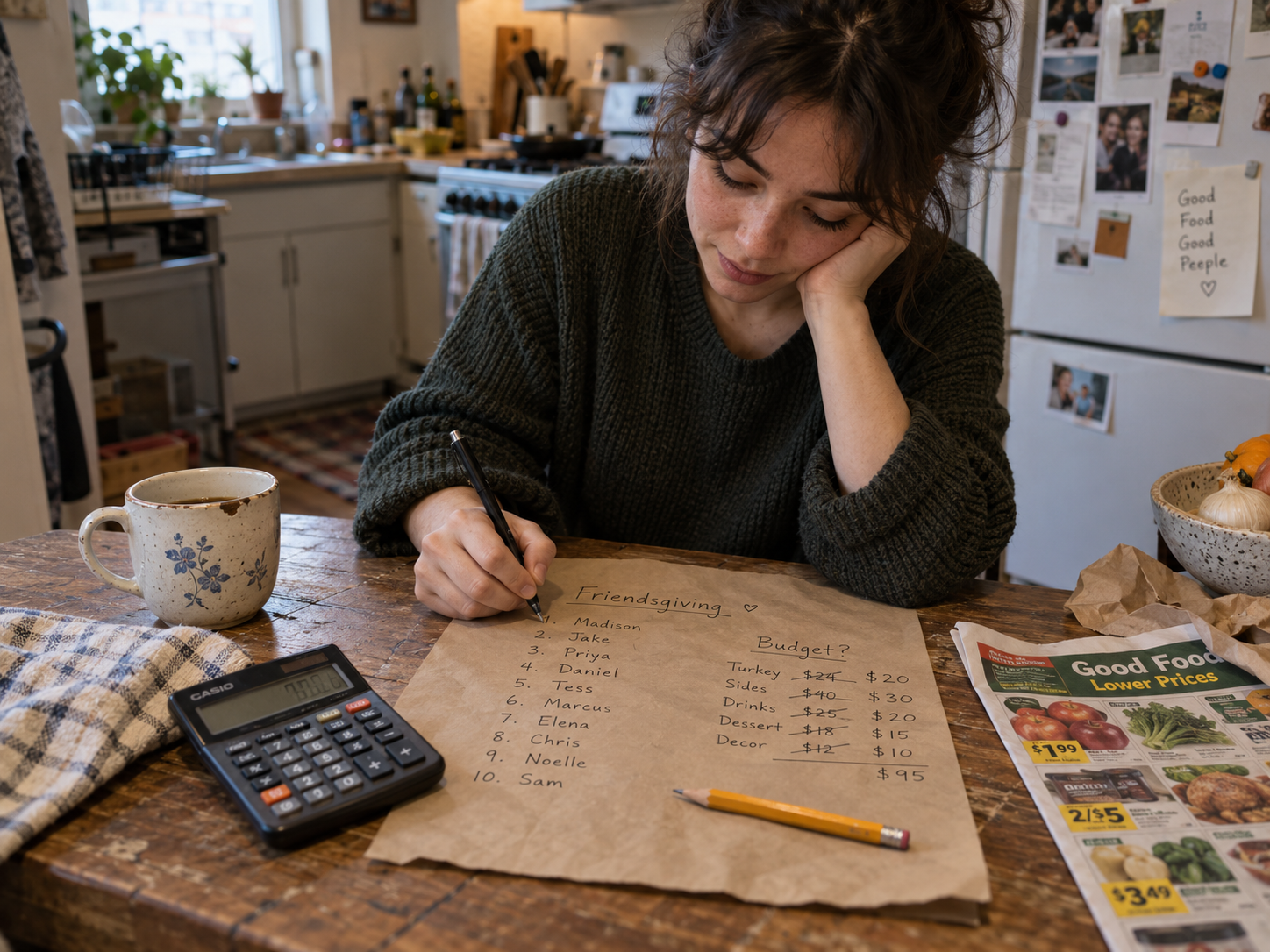
Let’s use ten people total: you plus nine guests. A $60 host budget gives you something real to plan against, but it isn’t a promise that every supermarket will sell a turkey at the same price.
Here’s how I’d split that $60.
| What the host covers | Maximum to spend |
|---|---|
| Whole turkey, bought on sale | $30 |
| Gravy ingredients | $5 |
| Ice for drinks | $5 |
| Paper napkins, if needed | $4 |
| Foil or a basic roasting supply, if needed | $4 |
| Price differences and forgotten items | $12 |
| Total spending ceiling | $60 |
Those are spending limits, not prices I measured at checkout. In particular, a $30 turkey allowance depends on the bird’s weight and local holiday promotions. Check your store’s weekly ad before you promise a roast turkey.
Have a roasting pan, serving spoons, plates, and ten usable seats already? Great. Don’t buy replacements. Put the money back in your account.
If $60 is still too much, tell the group that the host can cover the apartment and coordination while another guest volunteers to buy the main dish. Hosting doesn’t have to mean paying the largest bill.
Make the menu a potluck, with actual assignments
"Bring whatever you want" sounds relaxed. It also gives you four desserts, a six-pack of soda, and nobody willing to make potatoes.
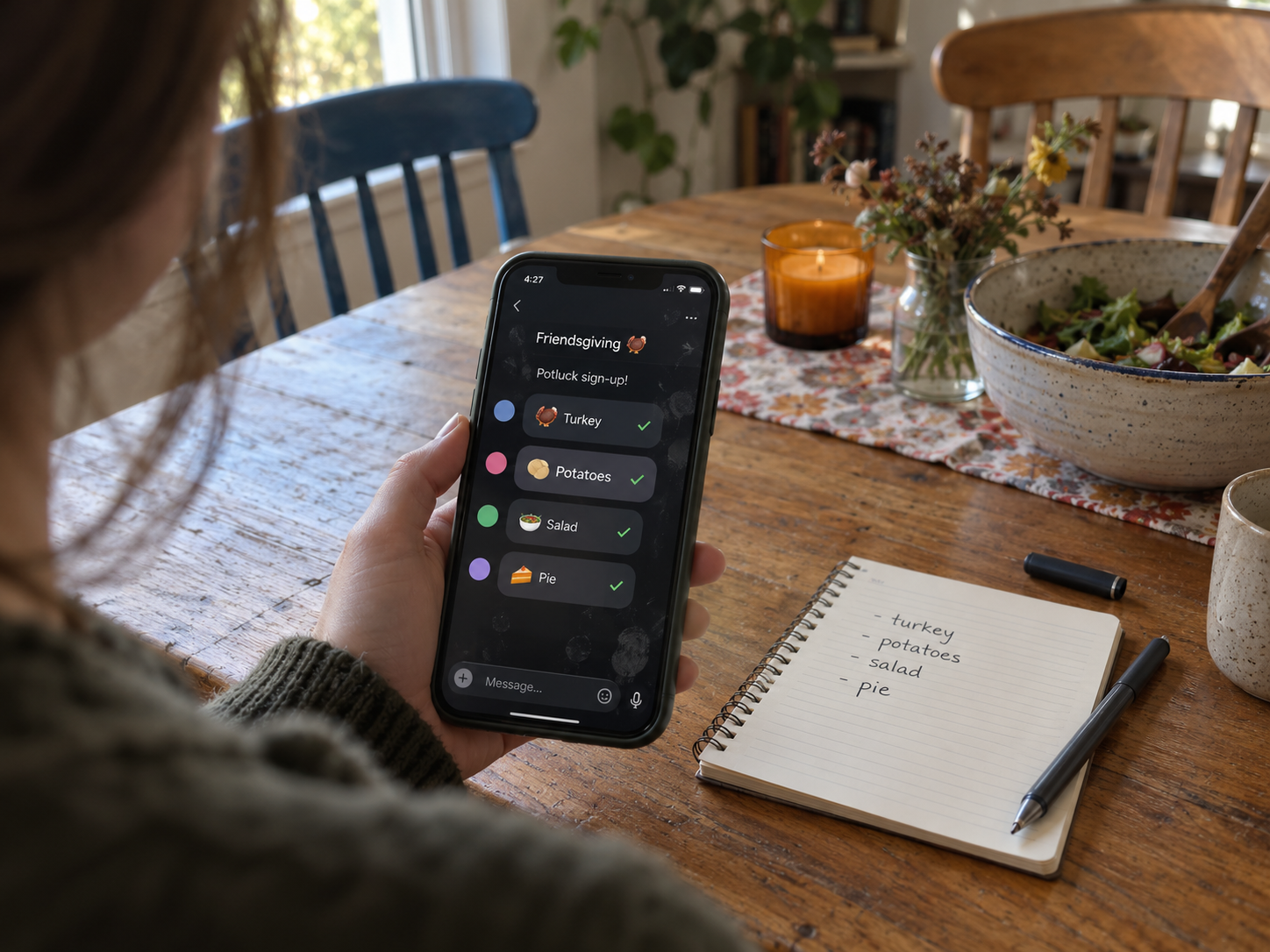
Send a short group message with assigned categories and ask people to choose a slot. A shared note works fine. Guests who need ideas can start with these cheap things to bring to Thanksgiving. You don’t need a party-planning app just to find out who’s bringing rolls.
Here’s a balanced menu for ten people.
| Who brings it | Dish or job | Amount to aim for |
|---|---|---|
| Host | Roast turkey and gravy | About a 14- to 16-pound bird |
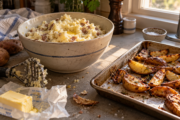
| Friend 1 | Mashed potatoes | 5 pounds of potatoes before cooking |
| Friend 2 | Stuffing | About 10 side servings |
| Friend 3 | Green beans | Three or four regular cans, or equivalent frozen |
| Friend 4 | Sweet potatoes | About 3 pounds |
| Friend 5 | Dinner rolls | At least 12 rolls |
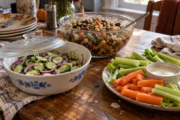
| Friend 6 | Big green salad | One bowl, with dressing on the side |
| Friend 7 | Pumpkin or apple dessert | 10 small servings |
| Friend 8 | Brownies or cookies | 12 or more pieces |
| Friend 9 | Bottled drinks or cleanup help | Agree on a job with the host |
You don’t need everyone to buy something. The friend who has a tight budget can wash dishes, handle music, or help carry a table upstairs. Sharing the work counts.
And ask about allergies and dietary needs before the assignments become final. A person who can’t eat turkey shouldn’t be left with a dinner roll and some plain lettuce. Give them a filling option, such as a bean-and-rice casserole or pasta dish, and make sure the person making it understands the ingredients.
If friends live far away, assign them food that can travel in a cooler or shelf-stable items such as plain rolls. Keep perishable cold dishes at 40°F or below and hot dishes at 140°F or above during transport. Someone driving 45 minutes shouldn’t be responsible for piping-hot mashed potatoes unless there’s a safe way to transport and reheat them.
Your invitation text can be plain and useful
Try this in the group chat:
"Friendsgiving at my place, Saturday at 5! I’ll handle turkey and gravy. Let’s each claim one side, dessert, drink, or help-with-setup job so nobody pays for the whole dinner. Reply with what you’d like to bring and tell me about any food allergies."
Include your actual address, parking instructions, and the time people should arrive. The exact dinner time matters more than a fancy digital invitation.
Keep the food familiar and the grocery list short
A turkey, mashed potatoes, stuffing, vegetables, rolls, and dessert make a complete meal. You don’t need an appetizer board, a themed cocktail, and a specialty cheese station before people are allowed to eat.
For the host, the turkey is the biggest decision. A 14- to 16-pound bird is a reasonable starting point for ten people eating several substantial sides. If your group expects lots of leftover meat, size up only after checking the cost. The USDA turkey guide suggests allowing about 1¼ pounds of whole turkey per person as a planning rule.
But there is an alternative worth checking before you spend anything. For the 2026 Thanksgiving season, ALDI has advertised a shopping basket for ten people for under $39, including a 16-pound turkey, stuffing, sweet potatoes, peas, rolls, fresh cranberries, vegetables, and pumpkin pie ingredients. It’s a group of groceries you cook yourself, not a prepared dinner. The promotion runs through November 25, with the advertised turkey available starting November 4 and pie mix starting November 11. ALDI also says the actual total depends on location and product selection.
That’s a useful Plan B if two friends cancel or your potluck sign-up falls apart. You could buy the base basket and let the group contribute a few extras. Don’t assume the under-$39 total applies at Walmart, Kroger, or another chain.
Let guests bring dishes they can make cheaply
Mashed potatoes and boxed stuffing are good assignments for people who want to cook but can’t spend much. A bag of potatoes does more work on a crowded table than a tiny tray of overpriced appetizers. For more choices, share these 27 cheap Thanksgiving side dishes with your guests.
Vegetable sides are easy to share too. Canned green beans with sautéed onion or glazed carrots don’t need a dozen ingredients. Ask whoever is bringing them to use a lidded reusable container if possible.
I’d keep dessert simple: one pie and a pan of brownies are enough choices for ten people. If everyone wants to bring dessert, make that a separate dessert swap later. Otherwise your dinner becomes a cake convention.
Decorate with what you already own
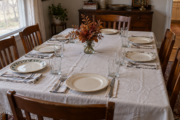
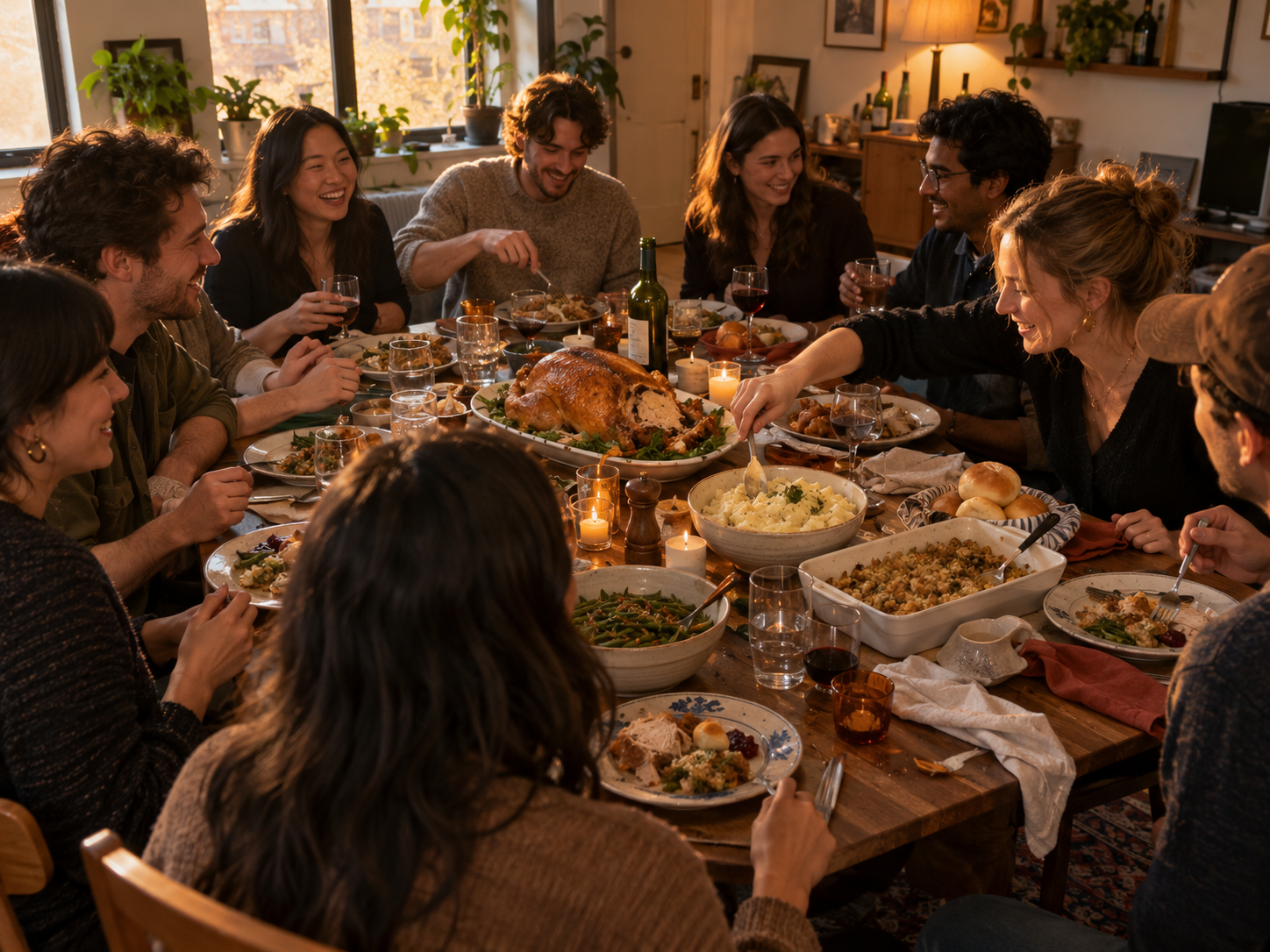
Start with the table you’re eating at. Wipe it down, lay out clean plates, and put a water glass at every seat. If your dishes don’t match, nobody needs an apology.
I’d skip the matching disposable plates and elaborate place-card holders. For ten guests, even small purchases add up once you’re buying all of them in multiples.
A few options that cost little or nothing:
Put grocery-store fruit in a bowl
Apples, oranges, or small pumpkins you already bought can sit in the center of the table. Keep the arrangement low enough that people can see each other. You can eat the fruit later instead of packing another plastic decoration into a closet.
Don’t buy seven mini pumpkins purely for a photo. That money belongs in the food budget.
Use jars instead of vases
Clean, empty glass jars are fine for a few grocery-store stems or herbs clipped from your own plants. A pitcher with branches can work, too, as long as they’re clean and don’t drop leaves into dinner.
If candles are part of the setup, keep open flames away from branches, paper, napkins, and anyone reaching over the table. Battery-powered candles you already own are the easier choice.
Make place cards from scrap paper
Fold small pieces of plain card or paper, write each person’s name, and stand them beside the plates. The best use of place cards is practical: help the person with a food allergy sit near someone who knows which dishes are safe.
You can also skip assigned seats altogether. A party of close friends doesn’t need a seating chart unless you’re solving a real problem.
Make the seating comfortable before making it pretty
Count the chairs. Really count them.
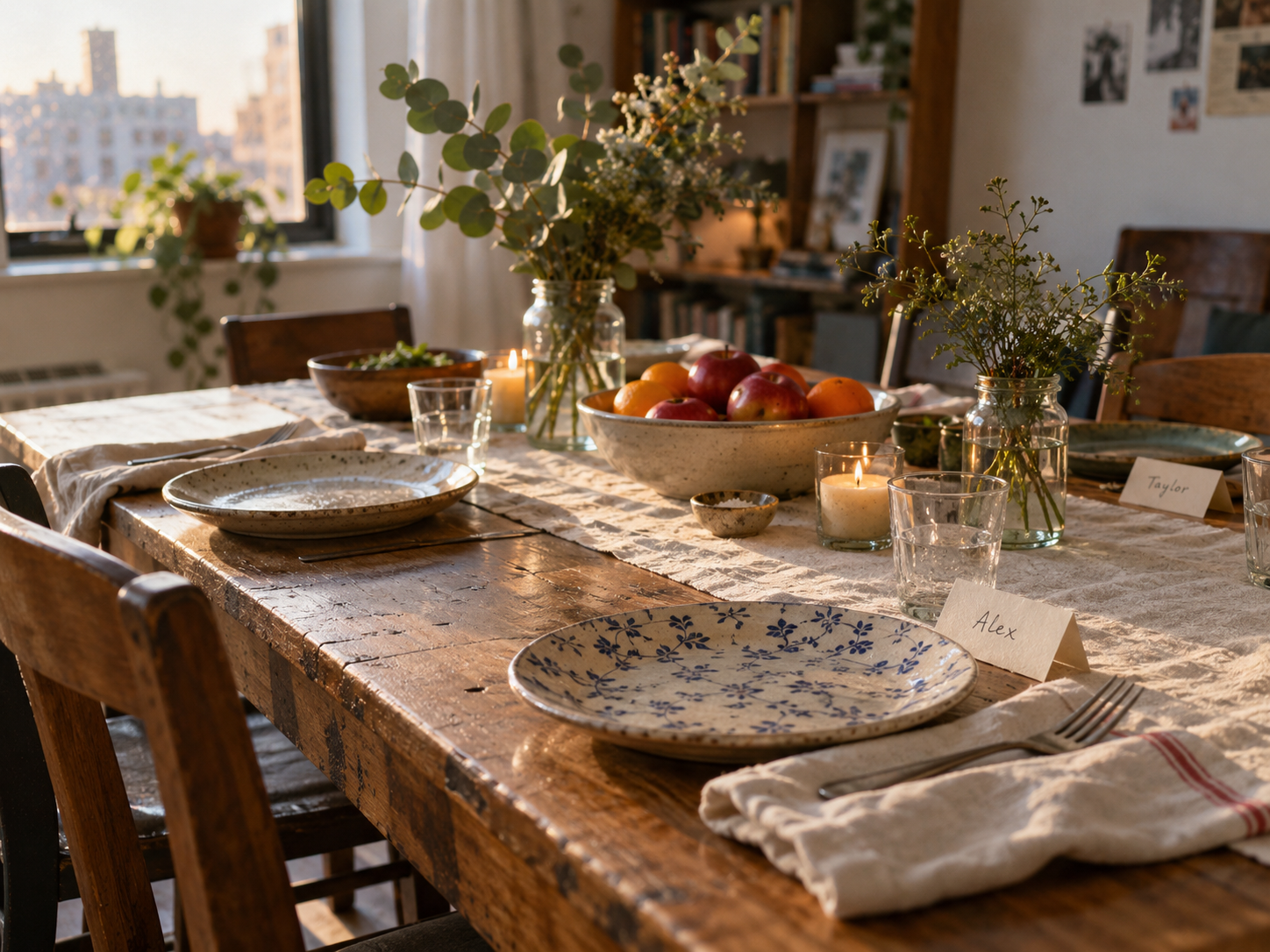
Ten people in a living room with six seats will spend the night balancing plates on their knees. Borrow folding chairs from neighbors or friends, move a desk chair into the room, or ask someone to bring a small folding table. Make sure any borrowed table is stable before it gets a heavy serving dish.
Don’t set hot pans directly on a glass coffee table. Put trivets or folded towels under serving dishes, and keep drinks away from laptops and game controllers. Those are more valuable precautions than a decorative table runner.
If your apartment is too small for a seated dinner, make it a buffet and let people eat in smaller groups. Tell guests ahead of time so nobody arrives expecting a formal dining setup.
Free Friendsgiving games people will actually play
Don’t plan two straight hours of forced party games. Dinner already gives people plenty to talk about.
Choose one easy game for people who want to join in, and leave space for conversation. Here are five that cost nothing if you’ve got paper, pens, or a phone.
Two truths and a lie
Each person shares two true facts and one made-up fact about themselves. Everyone guesses which one is false. Give each person about a minute, so ten players finish in roughly 15 minutes.
This works best with friends who don’t all know each other. Keep the prompts light; nobody needs to reveal something deeply personal just to win a round.
Thanksgiving charades
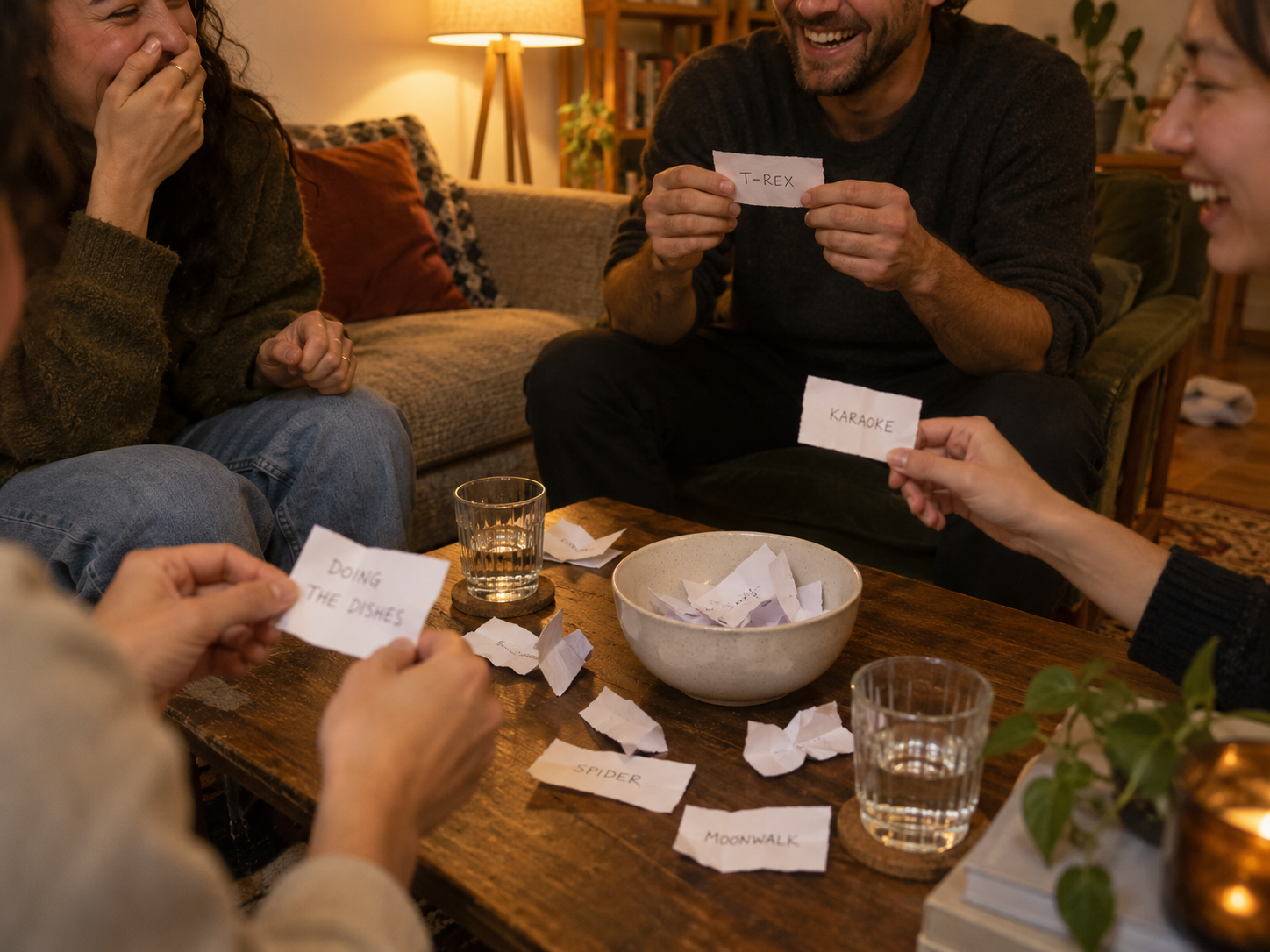
Write 15 simple phrases on scraps of paper, such as "dropping the pumpkin pie," "carving a giant turkey," or "burning the rolls." Split into two teams. One person acts without speaking while teammates guess within a minute.
The sillier the acting, the better. No prizes needed.
Guess the friend’s fact
Before dinner, ask guests to text you one harmless fact other people might not know. Write the facts anonymously on slips of paper and read them aloud. Let everyone guess who each fact belongs to.
Skip anything embarrassing or private. A good prompt is "What was your first job?" rather than "What’s your worst breakup story?"
A five-minute trivia contest
Put together eight or ten questions about shared interests: a TV show your group watches, favorite takeout spots, or things that happened in the past year. Split into teams of two or three.
Don’t make every question so obscure that one person wins before the game starts. Let people keep score on paper, and stop while they’re still having fun.
The leftover draft
Put a list of leftover foods on the table: turkey, mashed potatoes, cranberry sauce, dinner rolls, and pie. Ask each player to invent the best next-day meal using two of those ingredients. Everyone votes for the idea they’d actually eat.
It takes ten minutes, and the winner gets first choice of leftovers if there’s enough to share. That is a better prize than a plastic trophy.
A cooking schedule that won’t ruin the afternoon
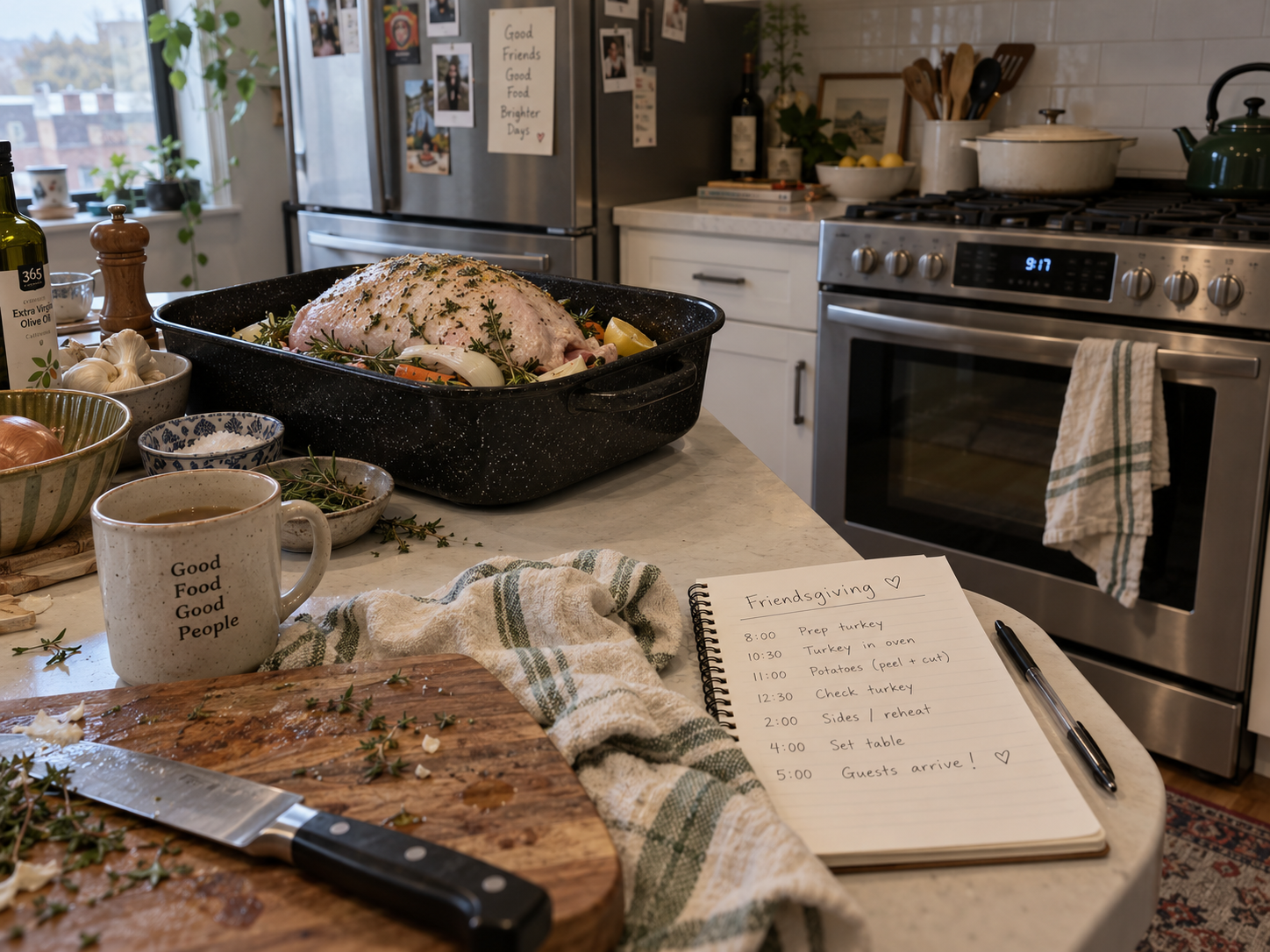
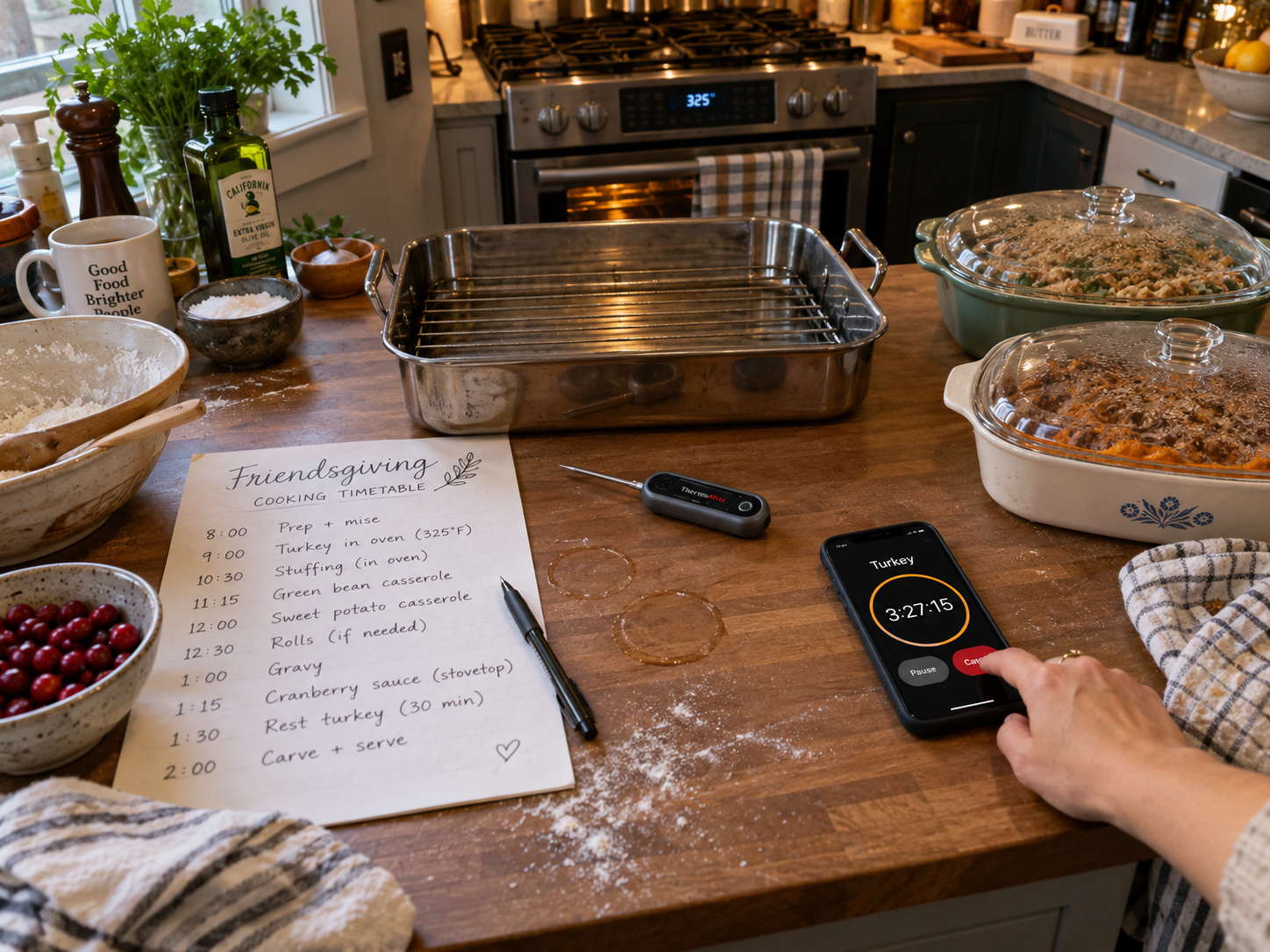
A turkey takes several hours, which means the host needs a realistic schedule long before the guests arrive. Don’t use a fixed roasting time instead of a food thermometer.
According to USDA refrigerator-thawing guidance, allow roughly one day per 4 to 5 pounds for a frozen turkey to thaw at 40°F or below. A 16-pound bird may need four to five days, so put the wrapped turkey on a tray in the refrigerator early. Never thaw it on the countertop.
The FoodSafety.gov turkey roasting chart lists an oven temperature of 325°F and roughly 3 hours 45 minutes to 4 hours 15 minutes for an unstuffed 14- to 18-pound bird. The turkey must reach 165°F in the thickest breast and innermost thigh and wing. Plan time to rest and carve it, too.
One week before
Confirm your ten-person group, assign dishes, and check whether you need any chairs or serving bowls. Choose the time dinner will actually be eaten, not just the time people arrive.
Make sure the turkey and roasting pan fit your oven. Finding that out while the bird is already thawed is an avoidable problem.
Four or five days before
Start thawing your frozen turkey in the refrigerator if its weight calls for that lead time. If you’re using the ALDI promotion, check when the particular items become available before choosing a shopping day.
The day before
Clear a refrigerator shelf for incoming dishes. Set up the table, put out trash and recycling bins, and chop anything you’re responsible for preparing.
Text the group one reminder: arrival time, which dish each person is bringing, whether it needs reheating, and where to park.
On Friendsgiving day
Roast the turkey with enough margin that you’re not carving while everybody waits. Put the cooked bird aside to rest when it reaches a safe temperature, then let guests heat their dishes in agreed oven slots.
Place serving utensils near the food. Set water out where guests can find it. If one friend volunteered to manage music, let them do it.
And don’t forget the food safety part. The USDA says perishable foods shouldn’t sit out for more than two hours unless they’re held safely hot (140°F or above) or cold (40°F or below). When temperatures are above 90°F, the limit is one hour. Refrigerate leftovers in shallow containers and reheat them to 165°F.
Split cleanup before the last guest leaves
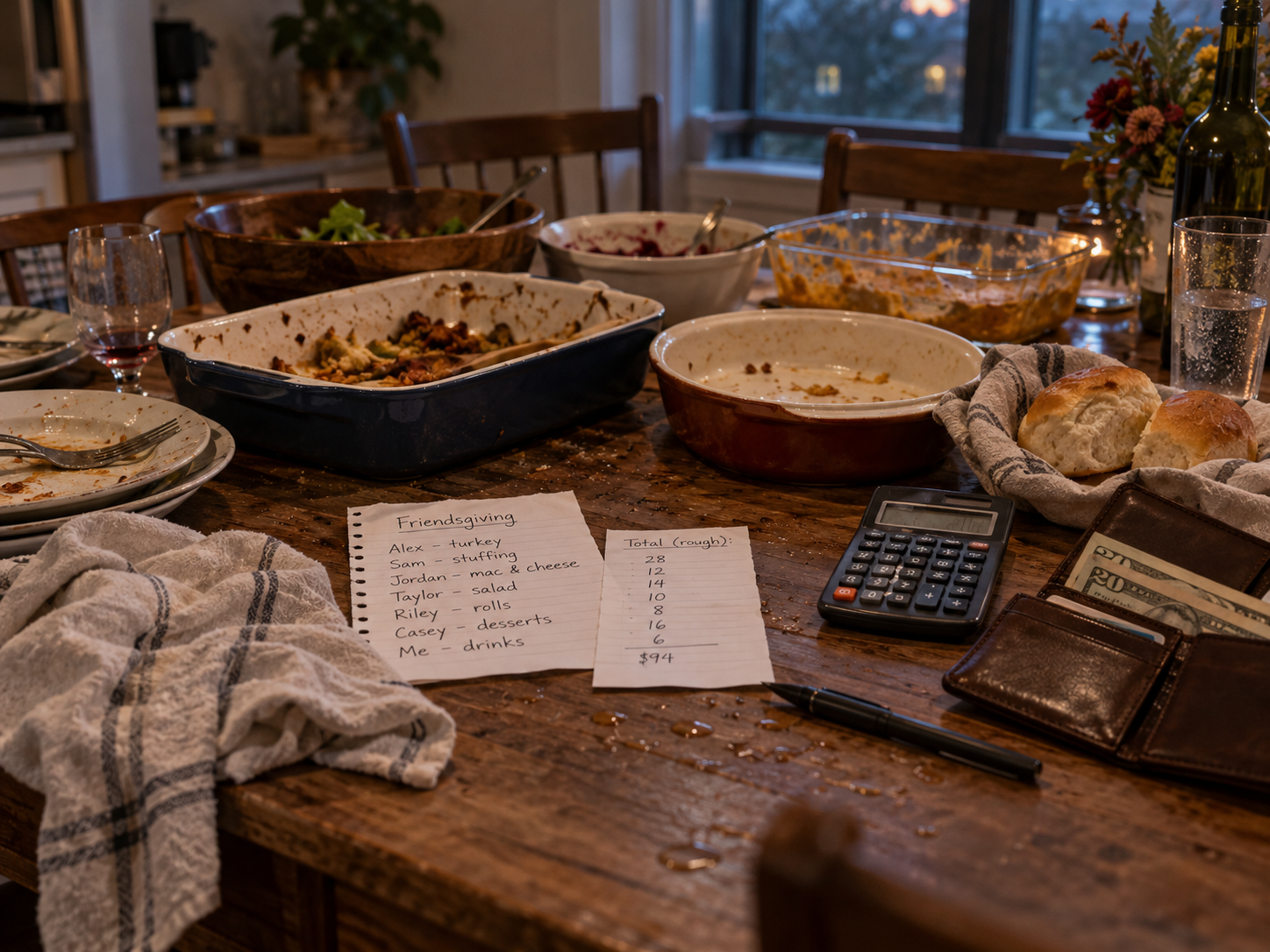
The cleanup plan should be as plain as the menu. Ask two friends to help scrape plates and load the dishwasher while another takes out trash and sorts containers.
Put a roll of masking tape and a marker by the food so people can label the dishes they’re taking home. If you already have a stack of washed takeout containers, use those instead of buying a bag of disposable leftover boxes. Don’t send someone home with a hot, leaky container balanced on a car seat.
If guests have brought borrowed pans, make sure they leave with them. Nobody wants a text three days later asking where the glass baking dish disappeared.
What Friendsgiving really costs
The host’s $60 spending ceiling is only the host’s share. Nine guests spending $5 to $10 each would add another $45 to $90 in food or drink, making the group’s total spending $105 to $150 if the host spent all $60. Some friends may use pantry ingredients or contribute only their time, so real totals will vary.
That’s why I wouldn’t advertise this as a $60 dinner for ten. It’s a $60 host budget for a shared meal. If you plan to buy the whole menu yourself, use the $100 Thanksgiving dinner plan for ten as a separate planning example.
Count the costs that are easy to forget: transportation for a guest who lives far away, ice, napkins, a food thermometer if the host doesn’t own one, and any extra seating you can’t borrow. Borrow first. Ask guests not to buy new containers to meet an imaginary standard.
For a smaller group of six, skip extra desserts and choose a smaller turkey or a different affordable main dish. For 15 or more, don’t simply buy twice as much food. Ask each person to bring enough of their assigned dish for about a dozen small side portions, and add more of the crowd favorites once you know who is coming.
A few things to settle before your friends arrive
What if somebody can’t afford to bring a dish?
Give them a no-cost task, such as setting the table or washing serving utensils. Let them come anyway. A potluck should help friends share a meal without turning the invite into an invoice.
Can you host without a turkey?
Absolutely. A pasta bake, chili bar, or baked potato dinner can be easier to make in a small kitchen. Tell people what the main dish is before they claim sides so the menu makes sense.
What if guests bring duplicate dishes?
It happens. Label what you have, put out a smaller portion of each, and refrigerate extras promptly. Next time, use a sign-up list with specific slots rather than "bring anything."
Do you need a formal theme or party favors?
No. I’d spend the extra $15 on enough food, a working thermometer, or a replacement serving spoon before buying favors guests might leave behind.
Send the group message tonight
Write down the guest count, choose your host spending limit, and claim the main dish. Then send the nine remaining contribution slots to your friends. It takes five minutes, and it solves most of the expensive surprises before anyone gets to the grocery store.